Coming to the State of the Art Gallery in downtown Ithaca this Saturday, May 12 at 7 PM, it's Jennifer Scappettone and Will Cordeiro!
Jennifer Scappettone is the author of From Dame Quickly, forthcoming from Litmus Press, and of a chapbook of graphic stills, Abluvion Almanac, out this spring from Outside Voices. Her poetry, prose, and translations from the Italian verse of Amelia Rosselli have recently appeared in Zoland Annual (Random House, 2007), The City Visible: Chicago Poetry for a New Century (Cracked Slab, 2007), Bay Poetics (Faux Press, 2006), 2nd Avenue Poetry, The Brooklyn Rail, The Canary, Chicago Review, Dusie, and P-Queue. She is now at work on Exit 43, an archaeology of the landfill and opera of pop-ups commissioned by Atelos Press, and on a special issue of Aufgabe devoted to contemporary Italian experiment. She works as an assistant professor of English and creative writing at the University of Chicago.
Will Cordeiro is a former NYC Teaching Fellow and co-founder of the Brooklyn Playwrights Collective. Several of his one-act plays have been produced in off-off-Broadway venues, and he has had a staged reading of his full-length verse play, The Errors of Eros. In addition, he has been a staff theater critic for offoffonline, and continues to write art and theater reviews for other publications as well. His poems have been published in such journals as the Brooklyn Review, Baltimore Review, Paradigm, and Dirt: A Journal of Contemporary Arts and Letters. Currently, he is an MFA candidate in poetry at Cornell, working on writing a long poem, Hymns, and an opera libretto.
Tuesday, May 08, 2007
Friday, May 04, 2007
Innovation Versus Elegance, Part Two
Here's the original question as posed by Bernadette Mayer to Bill Berkson in a letter dated May 10, 1981, along with Berkson's reply:
Still too looking for the distinction to be made between verse and prose, or poetry and prose, or most starkly, poetry and writing. Is poetry a subset of writing or something entirely other (the magazine after all is Poets _&_ Writers)? Certainly many writers who ought to know better drop poetry entirely from their discourse and assimilate "writing" into "fiction" (some of the coverage of Cynthia Ozick's riposte to Jonathan Franzen and Ben Marcus has noted this slip on her part). The common-sense approach is to regard fiction and poetry and that strange anti-being non-fiction as subsets of "writing." But culturally, poetry often seems to bear the peculiar burden of being considered the other of what's normally considered "writing"—that is, instead of being seen as a component of literacy, much less an aesthetic phenomenon, it's reserved for ritualistic and therapeutic purposes. Then there's "writing" as it appears under the sign of post-structuralism, as an unfinishable process subsumed under the word "text" (something woven or in the process of being woven), which stands opposed to still prevalent notions of the poem as a work, something monumental—or monoglossic, to use Bakhtin's term, which involves us from another angle in this question of genre since for Bakhtin it's not writing but "the novel" that provides the supreme possibility for heteroglossia. From this perspective "writing" may take the form of poetry but poetry is not always or even usually "writing," and "writing" which happens to assume the form of poetry retains a surprising capacity to shock, discomfit, or bore those who expect poetry to primarily serve some more or less utilitarian function (including such utilitarian functions as "self-expression" or "uplift").
So I would describe myself as someone interested in "writing" who also has a sizable investment in poetry, or who has moved from poetry toward "writing" without quite being willing to renounce those qualities that the very purest "writers" (I'm thinking particularly of Kenneth Goldsmith as he's entertainingly manifested himself over at the Poetry Foundation's group blog, Harriet) would like to challenge or leave behind. I'm interested in heteroglossic poetry, whether literally (poetry that incorporates other langugages, dialects, and modes or classes of speech) or otherwise (forms of poetic heteroglossia that intrigue me include poems that deal elegantly with the mundane and quotidian, or with the brute facts of the desiring and perishable body, or with the various modes and incarnations of history). I think it's worth approaching these questions of genre from this more existential angle: to interrogate forms and modes for their ontological and epistemological possibilities. I take Wittgenstein's claim that the limits of my language are the limits of my world extremely seriously. And yet it's also possible to imagine "limits" as necessary bounds against chaos, and to love and wish to conserve traditions of expression and form while also standing up for innovation (and elegance!) against the dull flatness and mechanical vulgarity that hems so much of us and our culture (literary and otherwise) round.
Is elegance opposed to innovation?Interesting that, in his comment on my original post, Reginald Shepherd suggested that my model for prose mixed with verse (as a congeries of "poetic rapture and expository discourse" should rather be Williams' Spring and All (which I do love) than Dante's La Vita Nuova. But I think he'd probably concur with Berkson's claim that the dichotomy set up by Mayer's question is a false one. I particularly like that last, non-parenthetical sentence of Berkson's: "Innovation... is always the revelation of furthered elegance." At the same time I continue to wonder about the distinction to be made between the cooked and the raw in poetry—Reginald doesn't like the word "messy" but I do because it suggests an expansiveness and tolerance for the collection of contradictions that oneself is (and the world too, of course). Maybe I just like it because it's so frankly in tension with my own fastidiousness.
Pretty iffy, I'd say. I don't believe it as a rule. Duncan McNaughton tried to tell me that, that my poems would be better deeper if I gave up being elegant. But I feel not elegant enough, and I also feel that if elegance exists in art it is a deep quality like character or part of the character of the work. Can we name a single innovator whose innovations are of value whose work at any point lacks elegance? Well, early Cézanne (before he innovated) and a lot of Williams has no elegance whatever. In music, a lot of raw music is more elegant (country blues or Cajun) than the refined versions of the same material. Innovation being a reaction against dull flatness or vulgarized mechanical "cheap imitation" style is always the revelation of furthered elegance. (WCW's problem was an awkward flatness but it wasn't dull.)
Still too looking for the distinction to be made between verse and prose, or poetry and prose, or most starkly, poetry and writing. Is poetry a subset of writing or something entirely other (the magazine after all is Poets _&_ Writers)? Certainly many writers who ought to know better drop poetry entirely from their discourse and assimilate "writing" into "fiction" (some of the coverage of Cynthia Ozick's riposte to Jonathan Franzen and Ben Marcus has noted this slip on her part). The common-sense approach is to regard fiction and poetry and that strange anti-being non-fiction as subsets of "writing." But culturally, poetry often seems to bear the peculiar burden of being considered the other of what's normally considered "writing"—that is, instead of being seen as a component of literacy, much less an aesthetic phenomenon, it's reserved for ritualistic and therapeutic purposes. Then there's "writing" as it appears under the sign of post-structuralism, as an unfinishable process subsumed under the word "text" (something woven or in the process of being woven), which stands opposed to still prevalent notions of the poem as a work, something monumental—or monoglossic, to use Bakhtin's term, which involves us from another angle in this question of genre since for Bakhtin it's not writing but "the novel" that provides the supreme possibility for heteroglossia. From this perspective "writing" may take the form of poetry but poetry is not always or even usually "writing," and "writing" which happens to assume the form of poetry retains a surprising capacity to shock, discomfit, or bore those who expect poetry to primarily serve some more or less utilitarian function (including such utilitarian functions as "self-expression" or "uplift").
So I would describe myself as someone interested in "writing" who also has a sizable investment in poetry, or who has moved from poetry toward "writing" without quite being willing to renounce those qualities that the very purest "writers" (I'm thinking particularly of Kenneth Goldsmith as he's entertainingly manifested himself over at the Poetry Foundation's group blog, Harriet) would like to challenge or leave behind. I'm interested in heteroglossic poetry, whether literally (poetry that incorporates other langugages, dialects, and modes or classes of speech) or otherwise (forms of poetic heteroglossia that intrigue me include poems that deal elegantly with the mundane and quotidian, or with the brute facts of the desiring and perishable body, or with the various modes and incarnations of history). I think it's worth approaching these questions of genre from this more existential angle: to interrogate forms and modes for their ontological and epistemological possibilities. I take Wittgenstein's claim that the limits of my language are the limits of my world extremely seriously. And yet it's also possible to imagine "limits" as necessary bounds against chaos, and to love and wish to conserve traditions of expression and form while also standing up for innovation (and elegance!) against the dull flatness and mechanical vulgarity that hems so much of us and our culture (literary and otherwise) round.
Thursday, May 03, 2007
Say Yes to Excess
The new issue of Action Yes is up and features all of the papers and presentations from the "Post-Avant: Strategies of Excess" panel from the Atlanta AWP earlier this year. All but one: at that time I was unable to present my little paper on the postmodern baroque because of the perfidy of Northwest Airlines; this time technical difficulties have prevented my paper from joining those of Anne Boyer, Lara Glenum, Johannes Göransson, K. Silem Mohammed, and Jed Rasula. But never fear: my essay will appear in the summer issue, keeping the theme of excess alive well into the ecstasies of autumn. In the meantime, check out what my panelmates said.
Also new, also interesting: a zine called Harp & Altar. I like their "Manifesto": "We believe what is written in the books, but now we want to see for ourselves."
Also new, also interesting: a zine called Harp & Altar. I like their "Manifesto": "We believe what is written in the books, but now we want to see for ourselves."
Wednesday, May 02, 2007
Innovation Versus Elegance
I've been reading Bernadette Mayer and Bill Berkson's correspondence and interviews as collected in What's Your Idea of a Good Time? from Tuumba Press. One question asked was something like, "Do you think elegance and innovation are mutually exclusive?" Something I've been worrying at, because it gets at the heart of a tension in my own work: the desire for highly polished surfaces versus the desire to get gritty or the willingness to be messy.
On Friday the a capella San Francisco supergroup Chanticleer came to Ithaca, of which one of my oldest and dearest friends, Eric S. Brenner, is a member. They are virtuoso performers and seeing them gave me the thrill that seeing any artist at work at the top of his/her/their game does, aside from the beauty and playfulness of the music itself. They are currently touring with no fewer than three separate repetoires, including the brand-new And On Earth, Peace: A Chanticleer Mass. It's wonderful music, but what's most compelling about the project is the fact that it was composed piecemeal by different contemporary composers of different backgrounds; I'm particularly interested in the "Credo," the most Catholic moment in the Catholic mass, which was written by an Israeli composer named Shulamit Ran. Talk about threading the needle: it incorporates Hebrew into the mass! Less successful—or perhaps just less elegant—is another section which invokes "Muslims and Christians and Jews" as participants and interlocutors in the mass. But I find myself wanting to draw a connection between the Chanticleer mass and the Berkson-Mayer question, because here are artists being asked to innovate within a rigid classical structure.
There are some poets whose pleasures are primarily instigated by their virtuosity, and only secondarily by what visions, experiences, or ideas they have to offer: for me this list would include Auden, Paul Muldoon, Heather McHugh, Mary Jo Bang, and Caroline Knox, to name a few. They err on the side of artifice and formal innovation, and their work either succeeds in ravishing me utterly or else seems slight; there's little ground in between. Then there are poets for whom the pleasure and drama primarily comes from the tension between the linguistic resources available to them and the difficulty or abstraction of what they are trying to express or construct: I tend to group Language poets and their followers and fellow travelers in this category. Another grouping whose work stimulates and challenges me would be poets for whom the disruption or challenging of elegance and/or "the poetic" is one of their primary energy supplies: this would include some of Frank O'Hara (but he usually achieves a tossed-off elegance) and most of the second- and nth-generation New York School poets (Ted Berrigan, Mayer herself, Alice Notley come to mind) and also the flarfists.
These may not be terribly interesting or satisfying categories, but they help me in trying to understand what moves me—and what has movement—in poetry, and how it is that I instinctually gravitate to formal virtuosity yet am constantly provoked, and sometimes shocked and delighted, by shaggier work. Sometimes I think it all comes down to Dickinson and Whitman, and the paradox of my own makeup that they represent for me: I am viscerally thrilled by Dickinson's agility and intensity, but find Whitman's ungainly, rambunctious mode of engagement with both himself and the larger (American) world more fun to think about. She's Latin, he's Italian; she's Hebrew, he's Yiddish; she's New England, he's Brooklyn; etc. Of course Dickinson is marvelously irregular and elliptical, while Whitman's catalogues gesture toward precision, but I still find the dialectic they present useful for thinking about American poetry in general and my own aesthetic impulses in partiocular.
Fourier Series represents, in part, an attempt to synthesize, or rather present in mixture, both tendencies: grids of short-lined, high-tension lyrics are broken up by prose "landscapes," presenting a slightly more schematic version of the old contest between line and sentence that charges verse. In some ways the model book for me in expressing these impulses would be Dante's Vita Nuova (sonnets interspersed between prose sections that purport to explain the poems but often don't) or the Japanese haibun. (Emily and I are traveling to Europe in a few weeks for our long-delayed honeymoon, which presents an ideal occasion for haibun.) But it may be more a question of the long line, or the page-as-field, or the disjunctive poem, versus more regular verse. Or it may really come down to attitude: fierceness, profanity, and the palpability of bodily experience versus a smooth surface corrugated by the tension of tamped-down forces. Bernadette Mayer herself presents an interesting working-out of this dialectic in her sonnets.
I suppose that it's the tension between form and content that we mean by the very word "art"—a tension somehow missing from its companion word "craft," which to my mind connotes the ideal subdual of one's ragged edges toward some utilitarian end. I like the danger of art: the high-wire act of virtuosity, or the uncertain quantity of seriousness and satire, or—hardest for a spectator to bear, and most rewarding when it works—the presentation of human vulnerability.
On Friday the a capella San Francisco supergroup Chanticleer came to Ithaca, of which one of my oldest and dearest friends, Eric S. Brenner, is a member. They are virtuoso performers and seeing them gave me the thrill that seeing any artist at work at the top of his/her/their game does, aside from the beauty and playfulness of the music itself. They are currently touring with no fewer than three separate repetoires, including the brand-new And On Earth, Peace: A Chanticleer Mass. It's wonderful music, but what's most compelling about the project is the fact that it was composed piecemeal by different contemporary composers of different backgrounds; I'm particularly interested in the "Credo," the most Catholic moment in the Catholic mass, which was written by an Israeli composer named Shulamit Ran. Talk about threading the needle: it incorporates Hebrew into the mass! Less successful—or perhaps just less elegant—is another section which invokes "Muslims and Christians and Jews" as participants and interlocutors in the mass. But I find myself wanting to draw a connection between the Chanticleer mass and the Berkson-Mayer question, because here are artists being asked to innovate within a rigid classical structure.
There are some poets whose pleasures are primarily instigated by their virtuosity, and only secondarily by what visions, experiences, or ideas they have to offer: for me this list would include Auden, Paul Muldoon, Heather McHugh, Mary Jo Bang, and Caroline Knox, to name a few. They err on the side of artifice and formal innovation, and their work either succeeds in ravishing me utterly or else seems slight; there's little ground in between. Then there are poets for whom the pleasure and drama primarily comes from the tension between the linguistic resources available to them and the difficulty or abstraction of what they are trying to express or construct: I tend to group Language poets and their followers and fellow travelers in this category. Another grouping whose work stimulates and challenges me would be poets for whom the disruption or challenging of elegance and/or "the poetic" is one of their primary energy supplies: this would include some of Frank O'Hara (but he usually achieves a tossed-off elegance) and most of the second- and nth-generation New York School poets (Ted Berrigan, Mayer herself, Alice Notley come to mind) and also the flarfists.
These may not be terribly interesting or satisfying categories, but they help me in trying to understand what moves me—and what has movement—in poetry, and how it is that I instinctually gravitate to formal virtuosity yet am constantly provoked, and sometimes shocked and delighted, by shaggier work. Sometimes I think it all comes down to Dickinson and Whitman, and the paradox of my own makeup that they represent for me: I am viscerally thrilled by Dickinson's agility and intensity, but find Whitman's ungainly, rambunctious mode of engagement with both himself and the larger (American) world more fun to think about. She's Latin, he's Italian; she's Hebrew, he's Yiddish; she's New England, he's Brooklyn; etc. Of course Dickinson is marvelously irregular and elliptical, while Whitman's catalogues gesture toward precision, but I still find the dialectic they present useful for thinking about American poetry in general and my own aesthetic impulses in partiocular.
Fourier Series represents, in part, an attempt to synthesize, or rather present in mixture, both tendencies: grids of short-lined, high-tension lyrics are broken up by prose "landscapes," presenting a slightly more schematic version of the old contest between line and sentence that charges verse. In some ways the model book for me in expressing these impulses would be Dante's Vita Nuova (sonnets interspersed between prose sections that purport to explain the poems but often don't) or the Japanese haibun. (Emily and I are traveling to Europe in a few weeks for our long-delayed honeymoon, which presents an ideal occasion for haibun.) But it may be more a question of the long line, or the page-as-field, or the disjunctive poem, versus more regular verse. Or it may really come down to attitude: fierceness, profanity, and the palpability of bodily experience versus a smooth surface corrugated by the tension of tamped-down forces. Bernadette Mayer herself presents an interesting working-out of this dialectic in her sonnets.
I suppose that it's the tension between form and content that we mean by the very word "art"—a tension somehow missing from its companion word "craft," which to my mind connotes the ideal subdual of one's ragged edges toward some utilitarian end. I like the danger of art: the high-wire act of virtuosity, or the uncertain quantity of seriousness and satire, or—hardest for a spectator to bear, and most rewarding when it works—the presentation of human vulnerability.
I like a look of Agony,
Because I know it's true —
Men do not sham Convulsion,
Nor simulate, a Throe —
The Eyes glaze once — and that is Death —
Impossible to feign
The Beads upon the Forehead
By homely Anguish strung.
Monday, April 30, 2007
Apparently there's a bespectacled photographer on the interwebs who shares my name, but with a definite article in front. Who is this guy? He takes great photos.
The Corey.
The Corey.
Congrats to Mark on his upcoming Zukofsky bio. Click the link for details.
Life is chaotic just now. Please stand by....
Life is chaotic just now. Please stand by....
Monday, April 23, 2007
American Small Press Poetry
I recently entered my collection of small press poetry books in a competition held by the Cornell Library. Didn't win, but I thought some might be interested in the little essay I wrote to introduce said collection:
For as long as I can remember I've been a haunter of bookstores and libraries. But I didn't begin to accumulate books in a serious way until I moved to the San Francisco Bay Area in 1999 to begin a Stegner Fellowship in Poetry at Stanford. It was there that I developed my interest in alternative American poetry, and started buying as much of it as I could afford. What do I mean by "alternative"? Contemporary poetry isn’t on many people's radar these days; even highly literate denizens of English departments don't always know much about what's going on in poetry. The poets who do break through to something like mainstream attention—John Ashbery, Mary Oliver, Louise Glück, and Billy Collins come to mind—actually represent fairly narrow swatches of what's been possible in American poetry for the past fifty years. These are the poets published by the big publishing houses, whose books actually stand a chance of being reviewed in the New York Times Book Review. But it's actually the small and really small presses in this country which have done the most to keep something like a living tradition of poetry alive. I should say rather "traditions," because the glory of American poetry is its multiplicity, the range of its techniques and styles and preoccupations. I have tried, in building up my collection, to accumulate as broad a swathe of these alternatives as one poor graduate student can.
San Francisco has been an alternative poetry mecca since before the time of the Beats, and I arrived there hungry to learn what my new city had to teach me. I visited Green Apple Books and City Lights in the city; I carried armloads out of Moe's and Serendipity in Berkeley; I uncovered treasures at the late lamented Wessex Books in Menlo Park. In these bookstores, and in conversations with other poets and poetry aficionados, I discovered numerous alternatives to the large-press poetry that had heretofore dominated my sense of the possible. At first I was most intrigued by the legacy of the Language poets, a tightly knit group that had gotten its start in the Bay Area in the 1970s and which had gone on to become the most controversial, contentious, and just plain difficult movements in American poetry since the days of Ezra Pound. The Language poets sought in both their writing and in their chosen modes of publication and distribution to challenge the prevailing hierarchies of American poetry, which at that time (and to some degree still even today) privileged a poetics of the "I"—what critic Charles Altieri has called the "scenic mode" of American poetry, in which a speaker looks out into a landscape and discovers—himself (or herself). For the Language poets, how you said a thing was as meaningful or more so than what you said, and the poems they produced were spiky, hard to follow, sometimes gleefully obscene, sometimes austerely beautiful. Their work attempts to enlist the reader as a comrade in challenging modes of meaning-making that have been hijacked by advertising and corporate media—and by an American poetry mainstream that was too often reflexively apolitical and anti-intellectual in its biases.
The Language poets sought nothing less than the seizure of the means of meaning production, and if their project was quixotic, the scope of its ambition was thrilling nevertheless. Uninterested in the New York publishing world (which would have rejected them out of hand, anyway), they created their own small presses and samizdat-style magazines and distributed them across a network of sympathetic and interested readers that now spans the globe. Browsing the bookstores, reading the spines, I learned to look for the press's name before even taking note of the title or author: O Books, Roof Books, The Figures, Edge, North Point Press. Since many of these publishers continue to operate, I began to discover new poets, some of them my age or close to it, who had learned what the Language poets had to teach about do-it-yourself meaning-making. I also began to discover a heritage for American poetry that was far richer and more complex than the narrative I’d been taught (it began with T.S. Eliot, skipped forward to the "Confessional" poets of the 1950s, and then petered out into the easygoing piety of the aforementioned scenic mode). Behind the Language poets were the "New Americans," first put forward as a group by Donald Allen’s 1960 anthology of the same name. I discovered the Black Mountain School of poetry, centered around the work and teaching of Charles Olson and the radical college in North Carolina that he'd taught at for a few crucial years in the 1950s alongside Robert Creeley, John Cage, Josef Albers, and Merce Cunningham. The poets of the San Francisco Renaissance—Robert Duncan, Jack Spicer, and Robin Blaser chief among them—brought a queer sensibility to their investments in the English literary tradition, and wrote poems stained with a baffling and exhilarating outsider's mysticism into their poems. The poets who were associated with the art scene in New York in the 50s and 60s, known as the New York School, brought a fierce, yet whimsical integrity to the task of writing poetry, and fostered one of the most enduring and pleasurable avant-garde movements in American poetry, one that continues to this day. More recently I’ve been fascinated by the practitioners of "flarf," a movement that like Language poetry pushes hard against the boundaries of the acceptably "poetic," but does it with more pop-cultural panache. And then there are the strangers and outsiders, the founders of one-poet movements or the participants in trends that were never recognized, or have yet to be fully born.
In two short years I spent nearly all of my disposable income on books of poetry published in the past five decades. Only a few of these would qualify as rare books, but I think I've built up a genuinely rare collection that surveys a broad swathe of what's been most significant and vital in alternative American poetry. There are holes and gaps: I am increasingly conscious of the odd provinciality that comes of being a citizen of empire, and would like to strike out into reading and collecting the poetries of other languages and traditions. Still I retain my commitment to taking the pulse of poetry by centering my reading and collecting on what's published by the small presses. My book collection, like many people's is a physical manifestation of my consciousness and the number of connections I'm able to make. I hope it continues to grow.
For as long as I can remember I've been a haunter of bookstores and libraries. But I didn't begin to accumulate books in a serious way until I moved to the San Francisco Bay Area in 1999 to begin a Stegner Fellowship in Poetry at Stanford. It was there that I developed my interest in alternative American poetry, and started buying as much of it as I could afford. What do I mean by "alternative"? Contemporary poetry isn’t on many people's radar these days; even highly literate denizens of English departments don't always know much about what's going on in poetry. The poets who do break through to something like mainstream attention—John Ashbery, Mary Oliver, Louise Glück, and Billy Collins come to mind—actually represent fairly narrow swatches of what's been possible in American poetry for the past fifty years. These are the poets published by the big publishing houses, whose books actually stand a chance of being reviewed in the New York Times Book Review. But it's actually the small and really small presses in this country which have done the most to keep something like a living tradition of poetry alive. I should say rather "traditions," because the glory of American poetry is its multiplicity, the range of its techniques and styles and preoccupations. I have tried, in building up my collection, to accumulate as broad a swathe of these alternatives as one poor graduate student can.
San Francisco has been an alternative poetry mecca since before the time of the Beats, and I arrived there hungry to learn what my new city had to teach me. I visited Green Apple Books and City Lights in the city; I carried armloads out of Moe's and Serendipity in Berkeley; I uncovered treasures at the late lamented Wessex Books in Menlo Park. In these bookstores, and in conversations with other poets and poetry aficionados, I discovered numerous alternatives to the large-press poetry that had heretofore dominated my sense of the possible. At first I was most intrigued by the legacy of the Language poets, a tightly knit group that had gotten its start in the Bay Area in the 1970s and which had gone on to become the most controversial, contentious, and just plain difficult movements in American poetry since the days of Ezra Pound. The Language poets sought in both their writing and in their chosen modes of publication and distribution to challenge the prevailing hierarchies of American poetry, which at that time (and to some degree still even today) privileged a poetics of the "I"—what critic Charles Altieri has called the "scenic mode" of American poetry, in which a speaker looks out into a landscape and discovers—himself (or herself). For the Language poets, how you said a thing was as meaningful or more so than what you said, and the poems they produced were spiky, hard to follow, sometimes gleefully obscene, sometimes austerely beautiful. Their work attempts to enlist the reader as a comrade in challenging modes of meaning-making that have been hijacked by advertising and corporate media—and by an American poetry mainstream that was too often reflexively apolitical and anti-intellectual in its biases.
The Language poets sought nothing less than the seizure of the means of meaning production, and if their project was quixotic, the scope of its ambition was thrilling nevertheless. Uninterested in the New York publishing world (which would have rejected them out of hand, anyway), they created their own small presses and samizdat-style magazines and distributed them across a network of sympathetic and interested readers that now spans the globe. Browsing the bookstores, reading the spines, I learned to look for the press's name before even taking note of the title or author: O Books, Roof Books, The Figures, Edge, North Point Press. Since many of these publishers continue to operate, I began to discover new poets, some of them my age or close to it, who had learned what the Language poets had to teach about do-it-yourself meaning-making. I also began to discover a heritage for American poetry that was far richer and more complex than the narrative I’d been taught (it began with T.S. Eliot, skipped forward to the "Confessional" poets of the 1950s, and then petered out into the easygoing piety of the aforementioned scenic mode). Behind the Language poets were the "New Americans," first put forward as a group by Donald Allen’s 1960 anthology of the same name. I discovered the Black Mountain School of poetry, centered around the work and teaching of Charles Olson and the radical college in North Carolina that he'd taught at for a few crucial years in the 1950s alongside Robert Creeley, John Cage, Josef Albers, and Merce Cunningham. The poets of the San Francisco Renaissance—Robert Duncan, Jack Spicer, and Robin Blaser chief among them—brought a queer sensibility to their investments in the English literary tradition, and wrote poems stained with a baffling and exhilarating outsider's mysticism into their poems. The poets who were associated with the art scene in New York in the 50s and 60s, known as the New York School, brought a fierce, yet whimsical integrity to the task of writing poetry, and fostered one of the most enduring and pleasurable avant-garde movements in American poetry, one that continues to this day. More recently I’ve been fascinated by the practitioners of "flarf," a movement that like Language poetry pushes hard against the boundaries of the acceptably "poetic," but does it with more pop-cultural panache. And then there are the strangers and outsiders, the founders of one-poet movements or the participants in trends that were never recognized, or have yet to be fully born.
In two short years I spent nearly all of my disposable income on books of poetry published in the past five decades. Only a few of these would qualify as rare books, but I think I've built up a genuinely rare collection that surveys a broad swathe of what's been most significant and vital in alternative American poetry. There are holes and gaps: I am increasingly conscious of the odd provinciality that comes of being a citizen of empire, and would like to strike out into reading and collecting the poetries of other languages and traditions. Still I retain my commitment to taking the pulse of poetry by centering my reading and collecting on what's published by the small presses. My book collection, like many people's is a physical manifestation of my consciousness and the number of connections I'm able to make. I hope it continues to grow.
Friday, April 20, 2007
Thursday, April 19, 2007
Grief
Because it seems I can think of little else but the Virginia Tech massacre this week, I will try and record some thoughts about it. It strikes home for many reasons. It could have happened anywhere (though it's a little harder, I think, to buy handguns in New York than Virginia). And I feel torn, to the point of tears, by a double-edged empathy. Of course I imagine what I would do to protect myself and my own students if someone came into the classroom with a gun. It's a sickening feeling, a gut-wrenching doubt. At the same time, though it seems clear that Cho was insane, part of me empathizes with what I imagine to be the humiliation that formed part of his motive. I was a socially inept outsider in high school myself—though much less so in college—and I carried many bitter resentments toward the more fortunate and popular. High school seemed like such a small, perfectly enclosed world, with such severe limitations on what was okay to say and do and feel, and I hated those who seemed so serenely well adapted to an environment that I felt to be soul-crushing. My salvation, at least in part, came from my sense that there were, in fact other worlds—with college being the nearest and most accessible. So it came to pass: I survived high school, went to college, and discovered a world where I could have friends and be encouraged in my interests. I never felt safe in high school but I felt safe at college—not that my time there was trouble-free, but it was nonetheless a place I could breathe. This was so much the case that a few years after graduating I found myself drawn back to academia as the place where I wanted to make my life.
Now, as a member of the academic community, I feel sickened at this attack on it, and I want to add my voice to those who cry "We're all Hokies now," just as other members of what's called the civilized world said "We are all Americans" after 9/11, in that too-brief moment of solidarity with suffering. And I'm shocked that someone could have found the world of college—which as I experienced it was a place for freedom and inquiry, a chance to readapt my gawky and oppressed high school self into something functional—to be their enemy. Again, I recognize that Cho was insane—a narcissistic sociopath—and identifying with his rage may be an egregious exercise in liberal guilt. I identify more now with my nascent role as professor, and my painful wish in that imaginary scenario to somehow interpose my body between a killer and his prey. And I feel the burden of failure that I on some level participate in. The failure of universities to protect their students. The failure of parents to raise their children as decent human beings. The dismal success of our governments in making incredibly lethal weapons readily available to anyone with the cash to pay for them (I am baffled by the argument that, if Cho hadn't had access to guns, he would have found some other weapon. Would we really have so many dead if he'd been armed with a knife, or even a pipe bomb?). And the failure of our culture, of its violence and failures of empathy toward the most vulnerable, both within and without our borders.
Not the least disturbing fact about the massacre is its unexpected intersection with creative writing. I was dismayed to learn that Cho was an English major, as though that somehow tarnished the discipline, further tugging on my perhaps overdeveloped sense of responsibility. One of the New York Times' articles on the shootings today includes this sentence: "Carolyn D. Rude, chairwoman of the English department, said faculty members were pro-active, even attending seminars on helping students in distress, a skill particularly applicable in an English department, where creative writing teachers had intimate glimpses into their students’ troubles and temperaments." This intersection of the academic discipline of creative writing with mental health and crisis prevention frankly takes me aback. In what sense has my scholarly and literary training prepared me for "helping students in distress"? If I am supposed to be a mental health counselor for my students, give me the appropriate resources and training! It surely doesn't hurt to attend "seminars on helping students in distress," but is it really a creative writing teacher's job to counsel disturbed students and to search their work for evidence of pathology? And should we accept the culture's further demand to view "creative writing" as thinly veiled narratives of the pathological, as opposed to the difficult art of possibility that it is? I fear these attacks will lead to the further erosion of the dignity of writing—will encourage the tendency to view poetry and fiction as more or less transparent containers and blunt instruments for deeply impoverished notions of "the personal" and "the real."
The pain of these events is almost too much to bear. I wish intensely for peace for all who've been touched by this, and most especially for the victims and their families.
Now, as a member of the academic community, I feel sickened at this attack on it, and I want to add my voice to those who cry "We're all Hokies now," just as other members of what's called the civilized world said "We are all Americans" after 9/11, in that too-brief moment of solidarity with suffering. And I'm shocked that someone could have found the world of college—which as I experienced it was a place for freedom and inquiry, a chance to readapt my gawky and oppressed high school self into something functional—to be their enemy. Again, I recognize that Cho was insane—a narcissistic sociopath—and identifying with his rage may be an egregious exercise in liberal guilt. I identify more now with my nascent role as professor, and my painful wish in that imaginary scenario to somehow interpose my body between a killer and his prey. And I feel the burden of failure that I on some level participate in. The failure of universities to protect their students. The failure of parents to raise their children as decent human beings. The dismal success of our governments in making incredibly lethal weapons readily available to anyone with the cash to pay for them (I am baffled by the argument that, if Cho hadn't had access to guns, he would have found some other weapon. Would we really have so many dead if he'd been armed with a knife, or even a pipe bomb?). And the failure of our culture, of its violence and failures of empathy toward the most vulnerable, both within and without our borders.
Not the least disturbing fact about the massacre is its unexpected intersection with creative writing. I was dismayed to learn that Cho was an English major, as though that somehow tarnished the discipline, further tugging on my perhaps overdeveloped sense of responsibility. One of the New York Times' articles on the shootings today includes this sentence: "Carolyn D. Rude, chairwoman of the English department, said faculty members were pro-active, even attending seminars on helping students in distress, a skill particularly applicable in an English department, where creative writing teachers had intimate glimpses into their students’ troubles and temperaments." This intersection of the academic discipline of creative writing with mental health and crisis prevention frankly takes me aback. In what sense has my scholarly and literary training prepared me for "helping students in distress"? If I am supposed to be a mental health counselor for my students, give me the appropriate resources and training! It surely doesn't hurt to attend "seminars on helping students in distress," but is it really a creative writing teacher's job to counsel disturbed students and to search their work for evidence of pathology? And should we accept the culture's further demand to view "creative writing" as thinly veiled narratives of the pathological, as opposed to the difficult art of possibility that it is? I fear these attacks will lead to the further erosion of the dignity of writing—will encourage the tendency to view poetry and fiction as more or less transparent containers and blunt instruments for deeply impoverished notions of "the personal" and "the real."
The pain of these events is almost too much to bear. I wish intensely for peace for all who've been touched by this, and most especially for the victims and their families.
Wednesday, April 18, 2007
Small presses and publishers are under threat from a postal rate hike designed to benefit big media. Click here to protest.
Tuesday, April 17, 2007
Monday, April 16, 2007
Cruelest Month
Is that one or two L's in "cruelest"? My limitations as a cameraman may prevent you from grasping what a great reading we had in Ithaca on Saturday from Kate Greenstreet and Janet Holmes. Kate's reading style is intimate and subtly funny—she draws you into the lyric landscapes of the road trip that is case sensitive. Most of the poems she read were from one of the latter sections of the book, which puts speaker and reader through the paces of a police procedural while the question "where's the body" takes on additional resonances. It was a thrill to have her, and her lovely husband Max too. I picked up a box of greeting cards she made—Kate is a visual as well as verbal artist—and now I have to decide who I like enough to send them to. My favorite has this legend superimposed over an evocatively blurry image of a human figure: "Then we played an intensive game of statues."
Janet delivered her poems with theatricality and flair. The title of her book, F2F is instant messaging talk for "face to face," and a number of its poems take the form of IM exchanges. These are, obviously, difficult to read, so most of the poems she read were those that featured figures from Greek myth, generally referred to by first initial: O for Orpheus, E for Eros, P for Psyche, etc. This might seem tired, but Janet makes it work by using these figures to meditate on the idea of being seen or not being seen—that is, she thinks about the role the mediated image plays in human relationships. All of these mythic figures of course engage the visual: Orpheus looks back at Eurydice and loses her (though in some versions of the myth she does the looking); Psyche is forbidden to see Eros and when she does, he abandons her; Narcissus has only eyes for himself while Echo is bodiless and invisible. Janet's project thinks through these figures, with considerable wit and panache, by placing them in a very recognizable modern mediascape.
Incredible April snow breeding no flowers out of no dead land is dumping down on Ithaca right now, but the roads may be clear enough for me to attempt my drive to New York this afternoon to catch tonight's reading. If you see me there be sure to congratulate me on my foolishness.
Janet delivered her poems with theatricality and flair. The title of her book, F2F is instant messaging talk for "face to face," and a number of its poems take the form of IM exchanges. These are, obviously, difficult to read, so most of the poems she read were those that featured figures from Greek myth, generally referred to by first initial: O for Orpheus, E for Eros, P for Psyche, etc. This might seem tired, but Janet makes it work by using these figures to meditate on the idea of being seen or not being seen—that is, she thinks about the role the mediated image plays in human relationships. All of these mythic figures of course engage the visual: Orpheus looks back at Eurydice and loses her (though in some versions of the myth she does the looking); Psyche is forbidden to see Eros and when she does, he abandons her; Narcissus has only eyes for himself while Echo is bodiless and invisible. Janet's project thinks through these figures, with considerable wit and panache, by placing them in a very recognizable modern mediascape.
Incredible April snow breeding no flowers out of no dead land is dumping down on Ithaca right now, but the roads may be clear enough for me to attempt my drive to New York this afternoon to catch tonight's reading. If you see me there be sure to congratulate me on my foolishness.
Sunday, April 15, 2007
Greenstreet and Holmes
Friday, April 13, 2007
Google Says
Google says sorry to Sohu for using their software.
Google Says Sorry for Stealing.
Google says not so fast,
Google says speed is king
google says - bring it on - we have safe harbor baby.
Google says outright "we're not building a mobile phone"
Have a say in what Google says about you.
Google says bill could spark antitrust fight.
Google Says “No” To Death Threats.
Google says it has plugged desktop search flaw.
Don't you dare google, says Google.
Google says that it has the "highest regard" for the privacy of its users' information, and insists there is nothing sinister about Gmail.
Google says may launch video service in Japan.
Help, Google Says I'm Gay. Google says I have a virus...
“Your brand is what Google says your brand is, not what you say your brand is,”
Google Says They Won't Ask For Help In China To Compete.
Google says "Gmail" is no joke, but lunar jobs are.
Google says go get your goggles~!
Google says web users are too stupid for semantics.
Google says its users trust the company.
Google Says I’m Important (now life has meaning).
Google says disable your firewall.
Google says to swim the Atlantic.
Google says it keeps search logs.
Google says so.
Google Says Pakistan Is Most Sex-starved Nation.
Google says no to digital music.
Google says swim.
Well, If Google says so.
Google says the laws would condemn the Australian public to the pre-Internet era.
Google says Internet isn't TV.
Google says: “You asked, and we listened:
Google Says You Have Insufficient Qi.
a "more relaxed" agreement with Google, says
Google says online dating offends family values.
Google says "Triumphalize this!"
Google says speed is the key.
Google says CIA thing is untrue.
Google Says It Compromised Principles by Bowing to Chinese Demands.
Assume that everything Google says is true.
Google says you don’t need a web site any more.
Google says no, Yahoo says yes.
Widget lets Google finish your sentences.
Google says, "go home".
Google Says "Hi"
Don't Google Google Says Google.
Google says you are a slut.
Google Says Porn Is Killer App For Mobile.
Google says that you can't confuse your site's visitors.
What Google says.
Google Says Sorry for Stealing.
Google says not so fast,
Google says speed is king
google says - bring it on - we have safe harbor baby.
Google says outright "we're not building a mobile phone"
Have a say in what Google says about you.
Google says bill could spark antitrust fight.
Google Says “No” To Death Threats.
Google says it has plugged desktop search flaw.
Don't you dare google, says Google.
Google says that it has the "highest regard" for the privacy of its users' information, and insists there is nothing sinister about Gmail.
Google says may launch video service in Japan.
Help, Google Says I'm Gay. Google says I have a virus...
“Your brand is what Google says your brand is, not what you say your brand is,”
Google Says They Won't Ask For Help In China To Compete.
Google says "Gmail" is no joke, but lunar jobs are.
Google says go get your goggles~!
Google says web users are too stupid for semantics.
Google says its users trust the company.
Google Says I’m Important (now life has meaning).
Google says disable your firewall.
Google says to swim the Atlantic.
Google says it keeps search logs.
Google says so.
Google Says Pakistan Is Most Sex-starved Nation.
Google says no to digital music.
Google says swim.
Well, If Google says so.
Google says the laws would condemn the Australian public to the pre-Internet era.
Google says Internet isn't TV.
Google says: “You asked, and we listened:
Google Says You Have Insufficient Qi.
a "more relaxed" agreement with Google, says
Google says online dating offends family values.
Google says "Triumphalize this!"
Google says speed is the key.
Google says CIA thing is untrue.
Google Says It Compromised Principles by Bowing to Chinese Demands.
Assume that everything Google says is true.
Google says you don’t need a web site any more.
Google says no, Yahoo says yes.
Widget lets Google finish your sentences.
Google says, "go home".
Google Says "Hi"
Don't Google Google Says Google.
Google says you are a slut.
Google Says Porn Is Killer App For Mobile.
Google says that you can't confuse your site's visitors.
What Google says.
Thursday, April 12, 2007
Coming to SOON
People in Ithaca, mark your calendars: Kate Greenstreet and Janet Holmes are coming to read in the SOON series at the State of the Art Gallery downtown at 7 PM on Saturday, April 14.
Kate Greenstreet is the author of case sensitive (Ahsahta Press, 2006) and Learning the Language (Etherdome Press, 2005). Her poems have appeared in CARVE, Cannibal, Fascicle, 26, Conduit, and other journals.
Janet Holmes is an award-winning poet and author of F2F (University of Notre Dame Press, 2006), The Green Tuxedo (1998) and Humanophone (2001). She is director of Ahsahta Press and teaches in the MFA Program in Creative Writing at Boise State University.
Speaking of readings, New York City denizens should not miss next week's Reading Between A and B series, featuring Susan Howe, Richard Greenfield, and Dan Beachy-Quick. It happens Monday, April 16 at 7:30 at the 11th Street Bar between Avenues A and B (natch). If I can swing the logistics I'll be seeing you there.
And finally: Good night, Mr. Rosewater.
Kate Greenstreet is the author of case sensitive (Ahsahta Press, 2006) and Learning the Language (Etherdome Press, 2005). Her poems have appeared in CARVE, Cannibal, Fascicle, 26, Conduit, and other journals.
Janet Holmes is an award-winning poet and author of F2F (University of Notre Dame Press, 2006), The Green Tuxedo (1998) and Humanophone (2001). She is director of Ahsahta Press and teaches in the MFA Program in Creative Writing at Boise State University.
Speaking of readings, New York City denizens should not miss next week's Reading Between A and B series, featuring Susan Howe, Richard Greenfield, and Dan Beachy-Quick. It happens Monday, April 16 at 7:30 at the 11th Street Bar between Avenues A and B (natch). If I can swing the logistics I'll be seeing you there.
And finally: Good night, Mr. Rosewater.

Monday, April 09, 2007
What Remains
(Before I say anything else: rocking good news from Mr. Bernes about his collection Starsdown (great title!). I've been waiting for a while now for someone to have the good sense to publish that work. Well done!)

Jessie, Emmet, and Virginia Mann, from Sally Mann's 1992 collection Immediate Family.
This past weekend we saw a documentary about photographer Sally Mann named for her exhibition of photographs of decaying bodies, landscapes in which death had occurred (Civil War battlegrounds, but also a spot on her own land where an escaped convict had killed himself to avoid capture by the police), and—as a perhaps willed moment of redemption (redemptivity?)—luminous, spooky photos of the faces of her three adult children (who as youngsters were made famous by photos like the one above). I'm a sucker for portraits of artists at work, which partially redeemed Pollock for me (almost more as a portrait of an actor at work than a painter); this is also why The Five Obstructions continues to be one of my absolute favorite films. The film depicts Mann as that rarest of artistic birds: a committed romantic who is also thoroughly unsentimental. The controversy that erupted over her most famous photos, which made her something of a bit player in the culture wars of the early 1990s, was centered on the the photos she took of her own children, many of them nudes or partial nudes. At least as disturbing to the public as the simple fact of a mother exhibiting photos of her naked children was her characteristic oil-and-water mixture of high romanticism (the photos are ravishingly beautiful, as are the children themselves—the whole Mann family appears to be an unusually good-looking one) and a refusal to idealize children in the accepted ways. If Mann's children are "little angels" and cherubim, they come out of Milton rather than Hallmark: fierce, terrifying, simultaneously innocent and knowing, and sexy without being sexualized. Mann's photos aren't in the least degrading of their subjects—these images are as idealized as anything produced by John Singer Sargent—but they refuse the uncomplicated notion of innocence that we like to attribute to children and childhood experience. They are, in short—you knew I was going to say this—a mode of pastoral.
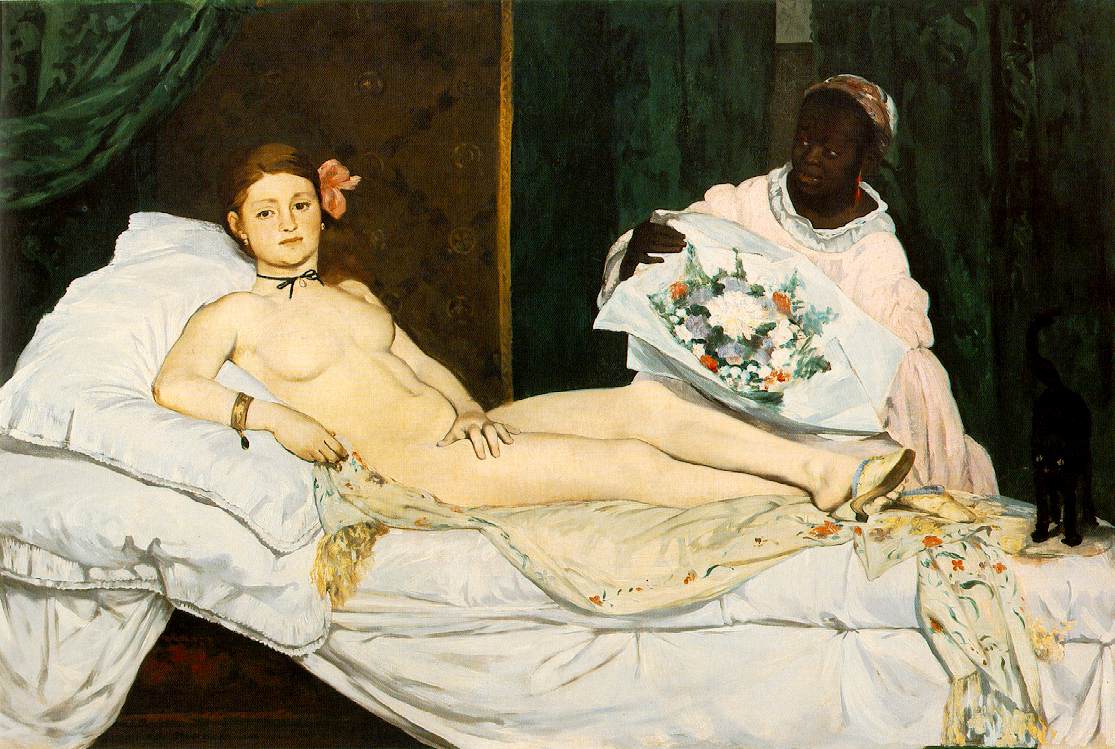
The makers of the film What Remains have a lot invested in their notion of Mann as a pastoralist. She is depicted for the most part as rooted to the ground of her Virginia farm (though curiously isolated from other Virginians, save for her family members and a couple of family friends) and seemingly detached from modernity. The camera fetishizes Mann's own camera (a gigantic nineteenth-century model that uses glass plates) and the matter-of-fact, dirty-hands artisanship of her photographic practice. If there's a computer or a TV in her house we don't get to see them, and it's mildly shocking to see Mann driving her BMW (which has a pro-choice bumpersticker on the back windshield, the only glimpse of overt politics in the film). Interviews with Mann stress her attachment to the land, while the narrative of the film mostly thwarts the possibility of her cosmopolitanism (in spite of a photo of young Jessie Mann that imitates Manet's Olympia [Manet—even their names sound the same]). We do get to see her briefly at the Corcoran Gallery in Washington, but because the Pace Gallery in New York decided not to show the death-haunted photos of What Remains we are spared the country-mouse-in-the-city image of Mann in Manhattan (where it is hard to imagine that this supremely confident woman would not in fact fit right in).
I am not trying to argue here that Mann's connection to the Virginia landscape is bogus—it's rather that I believe the filmmakers' desire to present Mann as a pure product of that landscape is a disservice to the full sophistication of her art. While Mann admits to being naive about the impact her family pictures would have—and how could she truly have anticipated her work's becoming a political football?—it's a mistake to depict her, however subtly, as a "naive artist" the way the film seems to want to. It may also be a mistake, though, for me to discount Mann's participation in that particular act of mythologizing—consider her response to an essay on the family photos by Noelle Oxenhandler (now THERE's a pastoral name!). Although she rather uninterestingly slams academia, for me the most vital part of Mann's response to Oxenhandler is her insistence that her children are willing collaborators in artmaking. I think this is a necessary fiction for many artists—not that by "necessary fiction" I mean that the assertion is necessarily untrue, only that it's a construct, a kind of ethical ladder, that the artist needs to climb if she's to fully encounter her subjects and materials. It's a particularly fraught fiction for a pastoral artist—someone with an investment in depicting the possibilities of a non-exploitative relationship to and among nature. In the case of Immediate Family, Mann's children appear as nymphs, spirits of the landscape that both beckon to and withdraw from the camera's eye. The images are startling for their unpredictable combination of polish and rawness: we feel we are beholding something of the quicksilver essence of life, yet that essence slips away even as we sense its presence in the stony, vulnerable eyes of Mann's children. In the spirit of nature we discover the unheimlich, the uncanny which, as Freud taught us, comes from recognizing some detail entirely intimate to our own lives that we have disavowed. We see ourselves in the photos as we imagine we once were, as we dream we might be again: fully alive, at one with our desire, suffering and free.

An image from the What Remains exhibition.
The What Remains photographs are a logical next step for Mann to take: from the uncanny of eros to the uncanny of death. Et in acardia ego: according to the film, Mann began taking these photographs after her husband Lawrence was diagnosed with a rare form of muscular dystrophy, bringing a whiff of mortality into their idyllic Virginia landscape. Also crucial was the above-mentioned convict's suicide by self-inflicted gunshot in full sight of Mann's house. Mann became fascinated with landscapes through which death had traveled, and from there became fascinated with how landscape travels through death in the form of decomposition, the absorption of the body by the land. So she took beautiful, deliberately flawed pictures of battlefields, and then she took photos of a beloved dog's decay (the above image), and from there took the most controversial step: she took photos at a coroner's laboratory of the decaying bodies of human beings. Presumably those people gave their bodies to science, but did they also intend to give them to art? In what sense is Mann a collaborator with the dead? It's the sort of unanswerable question that sharpens our relationship with that most seemingly harmless and pastoral of art forms, the landscape; as Mann says in the documentary, it's the artist who gives meaning to a landscape by remembering the deaths that took place in it.

Untitled #7 from Mann's Antietam series.
Mann's work is valuable for my understanding of the artist's pursuit—her construction—of a relationship to nature and the world that is neither exploitative nor wholly passive. We might call it humanist pastoral, or by any other label that would preserve the active stance we ought to take toward the world that made us and which we make. It also presses me closer against the barrier between my vulgar Marxist understanding of the world as a vortex of ideologies that conceal real material conditions, and my intuition of something more significant—some kind of resource—to be derived from mythic patterns of understanding of life and death. These structures of thought and feeling need to contest each other more vigorously, rather than coexist uneasily or through blindness to the other's reality. It's that path of contestation that Mann's work helps me to see more clearly, and to tread. Two roads diverged in a yellow wood....

This past weekend we saw a documentary about photographer Sally Mann named for her exhibition of photographs of decaying bodies, landscapes in which death had occurred (Civil War battlegrounds, but also a spot on her own land where an escaped convict had killed himself to avoid capture by the police), and—as a perhaps willed moment of redemption (redemptivity?)—luminous, spooky photos of the faces of her three adult children (who as youngsters were made famous by photos like the one above). I'm a sucker for portraits of artists at work, which partially redeemed Pollock for me (almost more as a portrait of an actor at work than a painter); this is also why The Five Obstructions continues to be one of my absolute favorite films. The film depicts Mann as that rarest of artistic birds: a committed romantic who is also thoroughly unsentimental. The controversy that erupted over her most famous photos, which made her something of a bit player in the culture wars of the early 1990s, was centered on the the photos she took of her own children, many of them nudes or partial nudes. At least as disturbing to the public as the simple fact of a mother exhibiting photos of her naked children was her characteristic oil-and-water mixture of high romanticism (the photos are ravishingly beautiful, as are the children themselves—the whole Mann family appears to be an unusually good-looking one) and a refusal to idealize children in the accepted ways. If Mann's children are "little angels" and cherubim, they come out of Milton rather than Hallmark: fierce, terrifying, simultaneously innocent and knowing, and sexy without being sexualized. Mann's photos aren't in the least degrading of their subjects—these images are as idealized as anything produced by John Singer Sargent—but they refuse the uncomplicated notion of innocence that we like to attribute to children and childhood experience. They are, in short—you knew I was going to say this—a mode of pastoral.
The makers of the film What Remains have a lot invested in their notion of Mann as a pastoralist. She is depicted for the most part as rooted to the ground of her Virginia farm (though curiously isolated from other Virginians, save for her family members and a couple of family friends) and seemingly detached from modernity. The camera fetishizes Mann's own camera (a gigantic nineteenth-century model that uses glass plates) and the matter-of-fact, dirty-hands artisanship of her photographic practice. If there's a computer or a TV in her house we don't get to see them, and it's mildly shocking to see Mann driving her BMW (which has a pro-choice bumpersticker on the back windshield, the only glimpse of overt politics in the film). Interviews with Mann stress her attachment to the land, while the narrative of the film mostly thwarts the possibility of her cosmopolitanism (in spite of a photo of young Jessie Mann that imitates Manet's Olympia [Manet—even their names sound the same]). We do get to see her briefly at the Corcoran Gallery in Washington, but because the Pace Gallery in New York decided not to show the death-haunted photos of What Remains we are spared the country-mouse-in-the-city image of Mann in Manhattan (where it is hard to imagine that this supremely confident woman would not in fact fit right in).
I am not trying to argue here that Mann's connection to the Virginia landscape is bogus—it's rather that I believe the filmmakers' desire to present Mann as a pure product of that landscape is a disservice to the full sophistication of her art. While Mann admits to being naive about the impact her family pictures would have—and how could she truly have anticipated her work's becoming a political football?—it's a mistake to depict her, however subtly, as a "naive artist" the way the film seems to want to. It may also be a mistake, though, for me to discount Mann's participation in that particular act of mythologizing—consider her response to an essay on the family photos by Noelle Oxenhandler (now THERE's a pastoral name!). Although she rather uninterestingly slams academia, for me the most vital part of Mann's response to Oxenhandler is her insistence that her children are willing collaborators in artmaking. I think this is a necessary fiction for many artists—not that by "necessary fiction" I mean that the assertion is necessarily untrue, only that it's a construct, a kind of ethical ladder, that the artist needs to climb if she's to fully encounter her subjects and materials. It's a particularly fraught fiction for a pastoral artist—someone with an investment in depicting the possibilities of a non-exploitative relationship to and among nature. In the case of Immediate Family, Mann's children appear as nymphs, spirits of the landscape that both beckon to and withdraw from the camera's eye. The images are startling for their unpredictable combination of polish and rawness: we feel we are beholding something of the quicksilver essence of life, yet that essence slips away even as we sense its presence in the stony, vulnerable eyes of Mann's children. In the spirit of nature we discover the unheimlich, the uncanny which, as Freud taught us, comes from recognizing some detail entirely intimate to our own lives that we have disavowed. We see ourselves in the photos as we imagine we once were, as we dream we might be again: fully alive, at one with our desire, suffering and free.

The What Remains photographs are a logical next step for Mann to take: from the uncanny of eros to the uncanny of death. Et in acardia ego: according to the film, Mann began taking these photographs after her husband Lawrence was diagnosed with a rare form of muscular dystrophy, bringing a whiff of mortality into their idyllic Virginia landscape. Also crucial was the above-mentioned convict's suicide by self-inflicted gunshot in full sight of Mann's house. Mann became fascinated with landscapes through which death had traveled, and from there became fascinated with how landscape travels through death in the form of decomposition, the absorption of the body by the land. So she took beautiful, deliberately flawed pictures of battlefields, and then she took photos of a beloved dog's decay (the above image), and from there took the most controversial step: she took photos at a coroner's laboratory of the decaying bodies of human beings. Presumably those people gave their bodies to science, but did they also intend to give them to art? In what sense is Mann a collaborator with the dead? It's the sort of unanswerable question that sharpens our relationship with that most seemingly harmless and pastoral of art forms, the landscape; as Mann says in the documentary, it's the artist who gives meaning to a landscape by remembering the deaths that took place in it.

Mann's work is valuable for my understanding of the artist's pursuit—her construction—of a relationship to nature and the world that is neither exploitative nor wholly passive. We might call it humanist pastoral, or by any other label that would preserve the active stance we ought to take toward the world that made us and which we make. It also presses me closer against the barrier between my vulgar Marxist understanding of the world as a vortex of ideologies that conceal real material conditions, and my intuition of something more significant—some kind of resource—to be derived from mythic patterns of understanding of life and death. These structures of thought and feeling need to contest each other more vigorously, rather than coexist uneasily or through blindness to the other's reality. It's that path of contestation that Mann's work helps me to see more clearly, and to tread. Two roads diverged in a yellow wood....
Friday, April 06, 2007
Here Comes Everybody
 An anthology of the interviews that Lance Phillips conducted over the past couple of years is now available from BlazeVOX Books. Check it out.
UPDATE: Oh well, never mind. See here.
Thursday, April 05, 2007

April Enthusiasms
- Mika, "Grace Kelly." Does Daniel Nester know about this guy? He's the absolute reincarnation of Freddie Mercury (I hear/see more than a little bit of Rufus Wainwright and Hedwig and the Angry Inch too), and this is the wittiest, most infectious pop song I've heard in ages. Deserves to be as big as Gnarls Barkley's "Crazy," or bigger.
- Effing #6, edited by Joe Massey. It's almost all excellent, but what stands out in my mind (with the magazine not in front of me) are the contributions of Mairead Byrne. She has a poem about a sponge in a plastic bag that nearly moved me to tears.
- The Show with Ze Frank. I am so very sorry I missed this while it was happening, but a stroll through the archives does not disappoint. Who likes the little duckies in the pond?
- Khaled Mattawa's poem "Tocqueville" in the premiere issue of /nor. One of the darkest, most sustained, genuinely terrifying political poems I've read in a long while. A searching investigation of self-betrayal and the violence that infects every level of empire, margins and centers. A poem-war on terror-war, a postcolonial polemic that never entirely loses sight of the mutual demands language and ideology make on each other. To paraphrase Ezra Pound, what this nation might be if it read poems like this haunts my sleep.
- Effing #6, edited by Joe Massey. It's almost all excellent, but what stands out in my mind (with the magazine not in front of me) are the contributions of Mairead Byrne. She has a poem about a sponge in a plastic bag that nearly moved me to tears.
- The Show with Ze Frank. I am so very sorry I missed this while it was happening, but a stroll through the archives does not disappoint. Who likes the little duckies in the pond?
- Khaled Mattawa's poem "Tocqueville" in the premiere issue of /nor. One of the darkest, most sustained, genuinely terrifying political poems I've read in a long while. A searching investigation of self-betrayal and the violence that infects every level of empire, margins and centers. A poem-war on terror-war, a postcolonial polemic that never entirely loses sight of the mutual demands language and ideology make on each other. To paraphrase Ezra Pound, what this nation might be if it read poems like this haunts my sleep.

Monday, April 02, 2007
The New Enclosures

"Between Primitive Accumulation and the New Enclosures" took place at Cornell this past weekend and featured the gentlemen above (Silvia Federici was unable to attend) thinking out loud about what many call globalization but what they call, following a concept invented in the early 1990s by the Midnight Notes Collective (of which Caffentzis and Linebaugh are charter members), "the new enclosures": the rampantly successful efforts of global capital to privatize "the commons," that is, property held in common by one or more communities. Wikipedia defines "enclosure" as "the process of conversion of common land to private ownership. Historically, enclosure is primarily associated with the privatization of land in England from the 12th to 19th centuries." "New enclosures" don't stop at land, but refer to what Iain Boal calls in the title of a forthcoming book "The Long Theft" of oil, the airwaves, intellectual property, and perhaps most fundamentally human labor (slavery was and is enclosure in its rawest form). The work of enclosure goes hand in hand with the creation of scarcity: it's practically common sense to realize that there's more than enough food produced to feed everyone on the planet, and yet for "economic reasons" that most of us poorly understand, food is not permitted to flow to the neediest but must be turned to profit and loss. Enclosure is also crucial to generating the surplus labor that capitalism demands: people in Africa, for example, who get pushed off of their subsistence farms (so that cash crops can be grown according to the "structural adjustments" dictated by the World Bank and IMF) are then forced to join (or try to join: there are miserable millions who cannot even get so far) the international labor market. Those with means of livelihood outside of the labor market pose a threat to that market, if only for the obvious reason that someone with a means of survival other than the wage can go on strike for longer than someone who lacks such means.
I was drawn to the conference primarily to hear Iain Boal, one of the members of the Retort group and one of the authors of Afflicted Powers: Capital and Spectacle in a New Age of War, which made a forceful impression on me back in 2005 (you can read the first essay from the book here). The book remains the most acute synthesis of the post-9/11 situation from a left perspective that I've encountered: a Debordian reading of the attacks, our responses to them, and to the ways in which political, cultural, and even military action are now mediated through/in the society of the spectacle. It was interesting to witness the conversation between Boal and the others; Caffentzis (who was the primary speaker at the morning session, devoted to Africa) and Linebaugh have a more traditionally Marxist view of the situation—as Linebaugh said, "I study Afflicted Powers looking for the class struggle and I do not find it." This was something that Boal said would be partially rectified in a missing chapter of the book, unready at press time (the book was published on Election Day 2004) that I gathered would eventually see the light of day, but Linebaugh's comment underscored the ideological differences among these men who were nevertheless unselfconscious users of the word "comrade": as Boal said, "The analysis of enclosure pushes one into the black tent" of anarchism, whereas Linebaugh and Caffentzis are still marching under the red banner of Marxism. But it was agreed in the general discussion that the concept of enclosure is actually enormously useful because it doesn't actually push one into any sort of tent, but is a mode of analysis useful to reds, blacks, and greens as well.
As a student of pastoral I was interested in hearing a green voice regarding the concept of the commons, but such was present at the panel only in its absence. The original "New Enclosures" essay that Midnight Notes published in 1990 (available at their site or from the conference site) is critical of the Green movement for its essential political conservatism after the waning of the anti-nuclear movement:
Ecologists in the Reagan period returned to the self-righteous ideology of "natural consciousness," morality of "good will" and a practice of "recycling" and "stewardship" of the 1970s. This movement has all the markings of Marx and Engels' petty producers' thought and manners writ large. Even the etymology of its name has echoes of the ancient Greek aristocrat's "aikos" or "hearth and home." But just as the word "economy" surreptitiously introduces into the capitalist factory the rural patriarchal relations of father-wife-child-slave, so too "ecology" presumes that the earth is an "aikos" to be well managed instead of the terrain of global class struggle. For proletarians might be natives of the earth but we have no home here. (331)Natives without homes: I think as I so often do of the protagonists of Virgils' First Eclogue, Meliboeus and Tityrus, whose hold on their "native," idyllic land is so precarious, subject to the whims of Rome and the weapons of soldiers. But I wonder too if Midnight Notes should be so confident about the desirability of transforming the earth into the battlefield for class struggle; I think of Michel Serres' crucial insight in The Natural Contract (published as Le Contrat Naturel in France the same year as "The New Enclosures") that the earth is not merely the background of human struggles but a third party implicitly excluded and subjugated by the combatants, who do not even have the minimal contract of war (expressed in the question, "Who will win?") between themselves and the earth that suffers from the combat and eventually retaliates against the combatants. I agree that thinking of the environment in terms of "management" is problematic; but I would rather see a left ecology movement that enlisted the environment as, in effect, one of the proletarians rather than sticking to the traditional Marxist view of nature as the "non-organic" object of human manipulation.

A great deal of food for thought: I will be thinking more in terms of "the commons" (a term whose inherent romanticism ought to be resisted) as I proceed with my pastoral project. And I'm interested in how some of the panelists' statements contradicted Frederic Jameson's claim that there are no longer any meaningful "pre-capitalist enclaves," and that in fact it is the condition of postmodernism that there be no outside to capital. The panelists seemed to suggest, particularly in their discussion of Africa, that there remained a mode of class struggle different from the struggle over the wage (that is, the class struggle inside capital): the struggle to remain outside of capitalism and to create or recover the commons. Perhaps this contradiction speaks simply to Jameson's being more concerned with describing the first world scene. But I was interested in the possibility opened here for the creation of the commons, and the panelists' claim that "commons" of one sort or another were constantly being produced by social groups, and are in fact the necessary ground of a social group or class' self-reproduction. I thought of course of the poetry world and how the DIY and small press scenes attempt to create a common space in which poets and poetry can create and sustain themselves. This commons is of course under constant assault by forces of enclosure that would appropriate it (another word for "commons" in this context would be "indie cred") or seek to turn its resources to the advantage of those who would, literally, capitalize upon it. At the same time there are limits to this analysis: if a poet from within this scene acquires some mainstream success and/or trappings, does this necessarily mean he or she has exploited and enclosed the commons? Perhaps a poet of integrity could find a way to re-integrate their new resources into the commons, providing new opportunities for the publication and support of others. The model of climbing out of the ghetto—any sort of ghetto—has to be countered with the model of replanting and reharvesting the seed, rather than selling it for market price (and driving down the value of others' seeds). That's where my thinking about this has led me, for now.
And yes, I have just joined the 21st century and acquired a digital camera. You can expect to see more images on this site from now on.
Friday, March 30, 2007
Light Switches
The first Interplay session with Prof. Matthew Belmonte and myself on Wednesday evening was quite fun—more like a conversation than a reading/lecture. I did my best to draw a connection between poetry and autism with a reading of my homophonic translation of Paul Celan's "Psalm" (it's the first poem in Selah), hypothesizing that the act of homophonic translation depended on a fixation of the surface features of language that possibly resembled an autistic relation to language. (This was partially confirmed by Matthew later on when he told us about how one autistic man uses slogans he's heard on television in an attempt to communicate—slogans whose relevance to the situation are rarely immediately apparent to his listeners.) My "reading" of Celan finds peculiar English analogues to the sounds of the German (a language I didn't know at all at the time the poem was written; I can now read it with a dictionary and lots of effort) so as to transplant, in a way, his first-order experience of trauma into my second-generation experience as the child of successful assimilated Jews (on my father's side) and of Holocaust survivors (my mother and her parents). Here's Celan's German:
Matthew's presentation was fascinating. He used a remark of mine about some new poems I read ("I didn't know I could say these things until I said them") as a jumping off point to talk about how normal people tend to peel past the "shallow" surface features of language so as to abstract a "deeper" meaning from them: we do violence to the percept so as to get at the concept. Autistic people do not have this means to control "the continuous flow of happenings," so they devise more primitive rituals to create a sense of safety and predictability—like flicking a light switch on and off for hours, secure in the knowledge of the perfect repeatability of their action. He shared with us a remarkable poem by a fourteen year-old autistic boy named Tito Mukhopadhyay:
Matthew used the wonderful phrase "a Cartesian cinema" by which to imagine autistic experience: one is watching a film with an incompetent projector, so that there's a picture but no sound, or vice-versa, or only a tiny portion of the screen is visible; so you go upstairs and ask the projectionist to run the film again, and again. It doesn't change the flaw in the information, but you scrutinize that flawed information over and over, hoping to master the hidden whole. It's not hard to see that these descriptions of autistic experience are like heightened expressions of everyone's experience—indeed, Matthew was quick to draw a comparison between postmodernity as described in literature (he cited Gravity's Rainbow) and autistic art. Ultimately, Matthew believes, it comes down to The Denial of Death—a book by Ernest Becker that he recommends for its insight into the need to hold back chaos, and our simultaneous resistance to the structures that we set up to protect ourselves from chaos. The autistic painter, losing herself in the details, or the autistic boy rocking and rocking, or flipping the light switch over and over, haunts us as an image of imprisonment in our own armor—an armor which will ultimately and after all, not protect us in the end.
Shifting gears, I'm looking forward to a conference being hosted at Cornell this weekend, "Between Primitive Accumulation and the New Enclosures." Unfortunately I'm going to miss the opening session this afternoon, but the readings for the conference (available here) are fascinating and will, I think, contribute a lot to my evolving understanding of the particular exigencies and necessity of utopian thought in the face of what Iain Boals calls in a wonderful interview the false Malthusian logic of neoliberalism.
PsalmJust typing this out, I see how my translation was really more sight than ear-driven, since I didn't realize that the German W is pronounced with a V-sound. But choosing ignorance is part of homophonic translation, and in this case was meant in part to convey the literal and metaphorical darkness in which Celan's experience, and my own family's, lay. Anyway, here's Michael Hamburger's translation, followed by my own:
Niemand knetet uns wieder aus Erde und Lehm,
niemand bespricht unsern Staub.
Niemand.
Gelobt seist du, Niemand.
Dir zulieb wollen
wir blühn.
Dir
entgegen.
Ein Nichts
waren wir, sind wir, werden
wir bleiben, blühend:
die Nichts-, die
Niemandsrose.
Mit dem Griffel seelenhell,
dem Staubfaden himmelswüst,
der Krone rot
vom Purpurwort, das wir sangen
über, o über
dem Dorn.
PsalmI just noticed there's no period at the end in Selah; that's a typo. Ah, well. The whole poem is a travesty, deliberately so, indexical of the impossible relationship of my personal (American) history with capital-H History. The poem is a little pile of the wrecked language that Benjamin's Angel cannot set right, a little rhythmic rocking in the face of the improbability of my own existence.
No one moulds us again out of earth and clay,
no one conjures our dust.
No one.
Praised be your name, no one.
For your sake
we shall flower.
Towards
you.
A nothing
we were, are, shall
remain, flowering:
the nothing-, the
no one's rose.
With our pistil soul-bright,
with our stamen heaven-ravaged,
our corolla red
with the crimson word which we sang
over, O over
the thorn.
Psalm
Neiman Marcus knits a leader out of earth and lime.
Neiman be-shops a western stab.
Neiman.
Galloped apts do, Neiman.
Dear zoo leads woolens
to veer bloomers.
Dear
engager.
Nine naughts:
where we're singed, we're wared,
we're weary bluehound.
Deathnaut dreading
kneed man's rose.
Mid-
den grin seals in hell
dem stable-faded him's liverwurst,
dares crone's rot.
Vow the pupa's word. Dazzled weresong.
Or bear, O you bar
the door.
Matthew's presentation was fascinating. He used a remark of mine about some new poems I read ("I didn't know I could say these things until I said them") as a jumping off point to talk about how normal people tend to peel past the "shallow" surface features of language so as to abstract a "deeper" meaning from them: we do violence to the percept so as to get at the concept. Autistic people do not have this means to control "the continuous flow of happenings," so they devise more primitive rituals to create a sense of safety and predictability—like flicking a light switch on and off for hours, secure in the knowledge of the perfect repeatability of their action. He shared with us a remarkable poem by a fourteen year-old autistic boy named Tito Mukhopadhyay:
Men and women are puzzled by everything I doIt's a remarkably clear expression, I think, of the impulse behind writing, or any sort of creative activity, which attempts to master "a world full of improbabilities / Racing towards uncertainty." Matthew also showed us some paintings by autistic artists (high-function autistics tend to be either verbally or visually oriented), many of which were nearly photorealistic except for certain peculiarities—the color scheme was often tuned toward the highest possible contrast, creating a psychedelic feel. In a remarkable painting of Times Square—done from memory, Matthew believes—the cars are lovingly detailed, right down to every reflection and gleam of metal, but there are no people and no drivers.
Doctors use different terminologies to describe me
I just wonder
The thoughts are bigger than I can express
Every move that I make shows how trapped I feel
Under the continuous flow of happenings
The effect of a cause becomes the cause of another effect
And I wonder
I think about the times when I change the environment around me
With the help of my imagination
I can go places that do not exist
And they are like beautiful dreams.
But it is a world full of improbabilities
Racing towards uncertainty.
Matthew used the wonderful phrase "a Cartesian cinema" by which to imagine autistic experience: one is watching a film with an incompetent projector, so that there's a picture but no sound, or vice-versa, or only a tiny portion of the screen is visible; so you go upstairs and ask the projectionist to run the film again, and again. It doesn't change the flaw in the information, but you scrutinize that flawed information over and over, hoping to master the hidden whole. It's not hard to see that these descriptions of autistic experience are like heightened expressions of everyone's experience—indeed, Matthew was quick to draw a comparison between postmodernity as described in literature (he cited Gravity's Rainbow) and autistic art. Ultimately, Matthew believes, it comes down to The Denial of Death—a book by Ernest Becker that he recommends for its insight into the need to hold back chaos, and our simultaneous resistance to the structures that we set up to protect ourselves from chaos. The autistic painter, losing herself in the details, or the autistic boy rocking and rocking, or flipping the light switch over and over, haunts us as an image of imprisonment in our own armor—an armor which will ultimately and after all, not protect us in the end.
Shifting gears, I'm looking forward to a conference being hosted at Cornell this weekend, "Between Primitive Accumulation and the New Enclosures." Unfortunately I'm going to miss the opening session this afternoon, but the readings for the conference (available here) are fascinating and will, I think, contribute a lot to my evolving understanding of the particular exigencies and necessity of utopian thought in the face of what Iain Boals calls in a wonderful interview the false Malthusian logic of neoliberalism.
Tuesday, March 27, 2007
It's Hard to Resist the Title Field
For a long time I've blogged mostly without titling my posts—it seemed to me that titles went against the informal spirit of blogging. (In that same spirit I'm extremely reluctant to revise a post once it's been posted.) The presence of the title field is something I've generally ignored except when I'm posting something that feels more like an essay than a blog post. But most bloggers do title everything, just as e-mail caused everyone to start thinking in terms of re: lines, introducing a formal element of the business memorandum into what has actually become, in my experience, an informal and intimate descendant of the personal letter. Now I'm feeling a new pressure from the medium to title my posts because I see that Google provides the title of a post when you search for one, which gives the entry the title's attached to just a little more weight and significance. I can't decide if this is part of what makes blogging a new medium, or if it's actually a pendulum-swing back toward print modes like the newspaper column or feuilleton.
Anyway, I've returned from a week of family visits with the in-laws (in Palm Beach—a very surreal place, like Vegas with the volume turned down) and surprising my sister and grandmother for their respective birthdays in Chicago. Now I'm back it's time to stop kidding around and get that dissertation finished. I am at the halfway point in my Ronald Johnson chapter, talking about him as a concrete poet: ARK will be next, perhaps via a detour through The Book of the Green Man as an example of a somewhat more conventional mode of pastoral that Johnson had to travel through on his way to the constructivism of ARK. I'm also beginning to look ahead to the book the dissertation will eventually become. The long poem seminar I'm auditing has shown me that there are at least two more canonical modernists whose work is fundamental to my conception of pastoral as a constructivist mode. Stein's Stanzas in Meditation is one of the purest examples I've found of abstract language used to approach the condition of a reciprocal accommodation to nature; I would also bring her Geographical History of America into my discussion because the dialectic she sets up between "human mind" and "human nature" also speaks to this question. And for today's seminar I'm hurrying through WCW's Paterson for the second time, and finding it stranger, more delightful, and more intensely self-critical than I'd remembered. Really it would be strange for me to write a book about modernist pastoral without discussing Williams; yet I've held off because I somehow needed to travel through more ostensibly difficult texts ("A", The Cantos) to arrive at my theory of pastoral. Those texts seemed to present more starkly the opposition between nature and history that constructivist pastoral dialecticizes. But now that I've passed through those texts I'm prepared to approach others whose renditions of that dichotomy seem either more crude (Williams) or oversubtle (Stein). Finally, having just taken Rachel Zucker's advice and downloaded James Schuyler's "Hymn to Life" from PENNSound, I am more than ever persuaded that I should write about the New York School as pastoralists, focusing particularly on Schuyler and O'Hara. It's exciting and a bit relieving to think of this project's life beyond the dissertation: exciting because I see I'm nowhere near done with this topic after five years of working on it, and relieving because I see how I can let the dissertation be a good dissertation (that is, a done dissertation) and reserve my perfectionist tendencies for life after the degree.
To conclude miscellaneously: if you're in the Ithaca area you might want to check out a new reading/talk series that the Cornell English department is starting called Interplay. It's meant to start interdisciplinary conversations: tomorrow night at 6:30 PM I'll be reading some of my poetry, then Professor Matthew Belmonte, who's an autism researcher, will give a paper, and then we'll see what common ground can be found. My first thought is that autism, as far as my limited understanding of it goes, requires the rational deciphering of social contexts and cues from those afflicted with it, a deciphering that non-autistic people perform intuitively and without much effort. Some poets, you might say, assumes a deliberately "autistic" attitude toward language and discourse, problematizing what ordinary language users take for granted. Of course I'm on dangerous ground with these speculations: it's just a few steps from here to the romanticization of illness as an opportunity for performance (Rain Man, anyone?). I look forward to a fuller conversation on the subject.
Anyway, I've returned from a week of family visits with the in-laws (in Palm Beach—a very surreal place, like Vegas with the volume turned down) and surprising my sister and grandmother for their respective birthdays in Chicago. Now I'm back it's time to stop kidding around and get that dissertation finished. I am at the halfway point in my Ronald Johnson chapter, talking about him as a concrete poet: ARK will be next, perhaps via a detour through The Book of the Green Man as an example of a somewhat more conventional mode of pastoral that Johnson had to travel through on his way to the constructivism of ARK. I'm also beginning to look ahead to the book the dissertation will eventually become. The long poem seminar I'm auditing has shown me that there are at least two more canonical modernists whose work is fundamental to my conception of pastoral as a constructivist mode. Stein's Stanzas in Meditation is one of the purest examples I've found of abstract language used to approach the condition of a reciprocal accommodation to nature; I would also bring her Geographical History of America into my discussion because the dialectic she sets up between "human mind" and "human nature" also speaks to this question. And for today's seminar I'm hurrying through WCW's Paterson for the second time, and finding it stranger, more delightful, and more intensely self-critical than I'd remembered. Really it would be strange for me to write a book about modernist pastoral without discussing Williams; yet I've held off because I somehow needed to travel through more ostensibly difficult texts ("A", The Cantos) to arrive at my theory of pastoral. Those texts seemed to present more starkly the opposition between nature and history that constructivist pastoral dialecticizes. But now that I've passed through those texts I'm prepared to approach others whose renditions of that dichotomy seem either more crude (Williams) or oversubtle (Stein). Finally, having just taken Rachel Zucker's advice and downloaded James Schuyler's "Hymn to Life" from PENNSound, I am more than ever persuaded that I should write about the New York School as pastoralists, focusing particularly on Schuyler and O'Hara. It's exciting and a bit relieving to think of this project's life beyond the dissertation: exciting because I see I'm nowhere near done with this topic after five years of working on it, and relieving because I see how I can let the dissertation be a good dissertation (that is, a done dissertation) and reserve my perfectionist tendencies for life after the degree.
To conclude miscellaneously: if you're in the Ithaca area you might want to check out a new reading/talk series that the Cornell English department is starting called Interplay. It's meant to start interdisciplinary conversations: tomorrow night at 6:30 PM I'll be reading some of my poetry, then Professor Matthew Belmonte, who's an autism researcher, will give a paper, and then we'll see what common ground can be found. My first thought is that autism, as far as my limited understanding of it goes, requires the rational deciphering of social contexts and cues from those afflicted with it, a deciphering that non-autistic people perform intuitively and without much effort. Some poets, you might say, assumes a deliberately "autistic" attitude toward language and discourse, problematizing what ordinary language users take for granted. Of course I'm on dangerous ground with these speculations: it's just a few steps from here to the romanticization of illness as an opportunity for performance (Rain Man, anyone?). I look forward to a fuller conversation on the subject.
Wednesday, March 21, 2007
The Rigor of Poetry and the Pleasures of Theory
There's been a lot of discussion recently of creative writing pedagogy, an extension of sorts of the conversation I began on the two cultures of AWP. Kasey Mohammed's incisive "Breaking the Self-Affirmation Barrier" has been followed up by Reginald Shepherd's "More on Creative Writing Pedagogy" and "A Few Issues in the Creative Writing Classroom." [CORRECTION, 3/25/07: The original post on this topic was from Reginald: "What Is Creative Writing For?" Kasey's post, and mine, followed from that.] I think it's worth recapitulating here the four "minimal requisites" that Kasey proposed for a creative writing program that would not "perpetuate the whole predatory pedagogical system":
There's no craft, or any practice of any art, without theory: the only question is whether or not one is conscious of the theory of poetry that you've adopted, or that's adopted you. Reginald's second post is an account of the difficulties of getting beginning writing students to accept even the most basic theory of creative writing: namely, that one has an audience in mind. The students come to a creative writing class with a romantic theory of spontaneous self-expression that must be gruelingly unlearned for them to get at the next level of sophistication, the theory of craft. The strength and weakness of this theory lies in its vagueness: the impoverished critical vocabulary of the "earned" ending, the image that "works," etc., can force the more persistent and inspired student into inventing his or her own critical idiom. At best, it steers the student clear of overdetermining vocabularies; at worst it itself overdetermines a complacent response to aesthetic givens. The theory of craft can be reified into an ideology with a Procrustean tendency to fit poems into whatever categories are most fashionable in a given academic community; without active and adventurous questioning on the part of the instructor or students, poems end up being measured against an imaginary normative given, and get either stretched or chopped so they fit.
A theory of craft is essential to any poet: it's the cognitive leap from a belief in one's own natural expertise to a respect for language as a material that offers up considerable resistance to expression. The next step—and this I think is what Kasey's program tries to address, since even most graduate programs don't address this level of thinking—is the crafting of theory, the cultivation of the skills necessary to articulate one's own poetics and place them in some kind of active relation with the numerous other poetics that are out there. Among other things this requires a sense of history, which means doing a lot more reading and a lot more work. It requires, above all, an instructor who is thinking and working on this level—but there are still many creative writing teachers out there, some of them in prestigious programs, who reject the very idea of theory, and instead instill a more-or-less rigid ideology of craft in their students. Of course the smartest or most stubborn students will react appropriately to this dogmatism, but if one of the goals of creative writing instruction is the promotion of critical and imaginative skills—if we believe that the study of creative writing should be an asset to the majority of students who will not go on to become professional writers—then we have to work to promote this more critical-theoretical model of pedagogy, and fight against the laziness and anti-intellectualism that characterizes so much of our culture, inside the academy and out.
It seems to me that the best teachers (and students) approach craft seriously and simultaneously with questions that belong properly to the realm of theory: what are different sorts of poems for, what effects are possible, what histories of poetic discourse are we bearing in mind, how can language be made responsive to identity and vice-versa. At the same time, I think the ideal poet's education would include megadoses of the canon (or canons—I certainly wish my own education had required me to study the poetry of another language, for example), the study and practice of traditional-closed and experimental-open prosodies, study of the history and practice of poetic distribution (small presses, little magazines), and the encouragement to follow an ultimately self-directed path through the contemporary scene. This poet's education can and does work in harmony with what I'd term an intellectual's education, defining as "intellectual" the preoccupation with analysis of the given (in literature, in politics, etc.). Although potentially synergistic, they are two very different practices: as practitioners of poiesis—as makers—poets challenge the given with very different tools than intellectuals. They stand somehow between the philosopher who seeks to understand the world and the activist who seeks to change it.
It is not truly necessary for a poet to be an intellectual, but I have a strong inclination toward those who embrace the "and" of my title, though they might emphasize one more than the other at times. The antagonism between the two falls away, I think, if one embraces the real rigor of poetry and turns away from the thoughtless model that equates poetry with pleasurable spontaneity and intellectualism with puritan drudgery. Which is not to say the conflict can be totally wished away, especially when it's internal. As someone who participates in any number of awkward hyphenates (MFA-PhD, poet-scholar, writer-critic) I sometimes myself am caught up in the trap of participating in a restricted economy in which the resources allocated to one dimension of work are stolen from the other. For most of my experience, though, they've actually enlarged each other. When I was at the University of Montana some of my fellow students in the MFA program bemoaned its rather minimal academic requirements: "I just want time to write!" they said. Meanwhile, I was finding that the literature seminars to be as stimulating as the workshops, sometimes more so. There was a real synergy between the two kinds of thinking, the two strategies of knowing: making and analysis, craft and theory. It's still true for me now, though the intellectual labor of a PhD program demands considerably more of my energy and time, and I do find myself wishing for pure "time to write."
Well, I see I've lapsed into personal anecdote and I don't expect such to be especially persuasive to anyone not similarly inclined. But I do believe in the rigor of poetry and the dignity and pleasure to be taken in intellectual work, and I think they ought to be put in productive relationships with each other. I believe in a limitless general economy of thought, and I would like to share that sense of abundance and possibility with my students, however I can.
1. Some degree of grounding in various historical and intellectual contexts for the production and reception of poetryKasey's ginger touch with the word "craft" (note the scare quotes) points to the history of that word's being used as an ideological bludgeon, and I think his stipulations in general reframe the conflict that Reginald's first post puts in professional terms (scholar-academics vs. poet-academics) as "craft" vs. "theory." It ought to be obvious what a false distinction this is, and yet the two words are routinely used to represent opposed positions that grind exceeding small back and forth, giving and losing meager amounts of ground, flung like mortar shells into the trenches and foxholes of English departments all over this land. The participants in this battle get the mud of pettiness and spleen all over themselves and their positions, though very occasionally it is transported to a more elevated plane: I'm thinking here of the famous confrontation between Robert Duncan (here standing for "craft" in its most occult aspects) and Barrett Watten (ditto for "theory") at a memorial for Louis Zukofsky at the San Francisco Art Institute in 1978. (You can find an account of the conflict by Nils Ya here; scroll almost all the way to the bottom.) Duncan, aggrieved enough to respond aggressively to Watten's aggressively cerebral approach to Zukofsky, is supposed to have said at one point, "Can't we just have fun?" To which Watten replied, "But Robert, this is how some of us get our fun." At which point the debate collapses into de gustibus non disputandum—and yet I am amazed how often those who turn "craft" into an ideological position attack scholars and theoretically minded writers for being puritan killjoys blind, deaf, and dumb to the pleasures of the text. The possibility of taking intense pleasure in reflective and critical activity doesn't seem to occur to them—more pernicious still is the belief that taking pleasure in critical thought somehow dulls one's senses to the kinetic and lingual pleasures of poetry.
2. Some degree of immersion in contemporary poetic theory, as well as relevant political and philosophical studies
3. Some degree of engagement with the social and communal aspects of the poetic life, especially insofar as this involves stepping out of the institutional framework and looking critically at what it means to be within it in the first place, and what it means for other writers to be outside it
4. Some degree of consideration of what lies beyond "craft" as defined above: under what conditions might vagueness be considered a "style" worth taking seriously? when do the protocols of "precision, concision, and avoidance of cliché" fall short, and what might be the value of deliberate unwieldiness, ugliness, or banality in certain contexts? and what else is out there?
There's no craft, or any practice of any art, without theory: the only question is whether or not one is conscious of the theory of poetry that you've adopted, or that's adopted you. Reginald's second post is an account of the difficulties of getting beginning writing students to accept even the most basic theory of creative writing: namely, that one has an audience in mind. The students come to a creative writing class with a romantic theory of spontaneous self-expression that must be gruelingly unlearned for them to get at the next level of sophistication, the theory of craft. The strength and weakness of this theory lies in its vagueness: the impoverished critical vocabulary of the "earned" ending, the image that "works," etc., can force the more persistent and inspired student into inventing his or her own critical idiom. At best, it steers the student clear of overdetermining vocabularies; at worst it itself overdetermines a complacent response to aesthetic givens. The theory of craft can be reified into an ideology with a Procrustean tendency to fit poems into whatever categories are most fashionable in a given academic community; without active and adventurous questioning on the part of the instructor or students, poems end up being measured against an imaginary normative given, and get either stretched or chopped so they fit.
A theory of craft is essential to any poet: it's the cognitive leap from a belief in one's own natural expertise to a respect for language as a material that offers up considerable resistance to expression. The next step—and this I think is what Kasey's program tries to address, since even most graduate programs don't address this level of thinking—is the crafting of theory, the cultivation of the skills necessary to articulate one's own poetics and place them in some kind of active relation with the numerous other poetics that are out there. Among other things this requires a sense of history, which means doing a lot more reading and a lot more work. It requires, above all, an instructor who is thinking and working on this level—but there are still many creative writing teachers out there, some of them in prestigious programs, who reject the very idea of theory, and instead instill a more-or-less rigid ideology of craft in their students. Of course the smartest or most stubborn students will react appropriately to this dogmatism, but if one of the goals of creative writing instruction is the promotion of critical and imaginative skills—if we believe that the study of creative writing should be an asset to the majority of students who will not go on to become professional writers—then we have to work to promote this more critical-theoretical model of pedagogy, and fight against the laziness and anti-intellectualism that characterizes so much of our culture, inside the academy and out.
It seems to me that the best teachers (and students) approach craft seriously and simultaneously with questions that belong properly to the realm of theory: what are different sorts of poems for, what effects are possible, what histories of poetic discourse are we bearing in mind, how can language be made responsive to identity and vice-versa. At the same time, I think the ideal poet's education would include megadoses of the canon (or canons—I certainly wish my own education had required me to study the poetry of another language, for example), the study and practice of traditional-closed and experimental-open prosodies, study of the history and practice of poetic distribution (small presses, little magazines), and the encouragement to follow an ultimately self-directed path through the contemporary scene. This poet's education can and does work in harmony with what I'd term an intellectual's education, defining as "intellectual" the preoccupation with analysis of the given (in literature, in politics, etc.). Although potentially synergistic, they are two very different practices: as practitioners of poiesis—as makers—poets challenge the given with very different tools than intellectuals. They stand somehow between the philosopher who seeks to understand the world and the activist who seeks to change it.
It is not truly necessary for a poet to be an intellectual, but I have a strong inclination toward those who embrace the "and" of my title, though they might emphasize one more than the other at times. The antagonism between the two falls away, I think, if one embraces the real rigor of poetry and turns away from the thoughtless model that equates poetry with pleasurable spontaneity and intellectualism with puritan drudgery. Which is not to say the conflict can be totally wished away, especially when it's internal. As someone who participates in any number of awkward hyphenates (MFA-PhD, poet-scholar, writer-critic) I sometimes myself am caught up in the trap of participating in a restricted economy in which the resources allocated to one dimension of work are stolen from the other. For most of my experience, though, they've actually enlarged each other. When I was at the University of Montana some of my fellow students in the MFA program bemoaned its rather minimal academic requirements: "I just want time to write!" they said. Meanwhile, I was finding that the literature seminars to be as stimulating as the workshops, sometimes more so. There was a real synergy between the two kinds of thinking, the two strategies of knowing: making and analysis, craft and theory. It's still true for me now, though the intellectual labor of a PhD program demands considerably more of my energy and time, and I do find myself wishing for pure "time to write."
Well, I see I've lapsed into personal anecdote and I don't expect such to be especially persuasive to anyone not similarly inclined. But I do believe in the rigor of poetry and the dignity and pleasure to be taken in intellectual work, and I think they ought to be put in productive relationships with each other. I believe in a limitless general economy of thought, and I would like to share that sense of abundance and possibility with my students, however I can.
Monday, March 12, 2007
Outstanding SOON reading this past Saturday with University of Denver alums Robert Strong (Robert was supposed to come last month, but there were seven feet of snow in his way), Karla Kelsey, and Karla's husband Peter Yumi, who for the last part of the reading collaborated with her by performing electronic music (which included in its many voices a riff from Celia Zukofsky's music for "A"-24) to accompany an excerpt from her remarkable new manuscript Iteration Nets, a sequence of sonnets that expand into prose poems in the second section which are then put under erasure in the third. Robert began the reading with his prose poem Brethren: Order of the Seasons, which had for the occasion taken the form of a sensuously beautiful chapbook published by Karla and Peter's Imprint Press. The poem follows the laboring lives of members of an intentional religious community; that plus Robert's having edited an anthology of spiritual poetry (from which he read selections by Emily Dickinson, Alan Dugan, and others) and having written a book of poems titled Puritan Spectacle has caused him to be asked in interviews, "What it's like, what are the challenges, in being a writer of faith?" Which as he wryly remarked, made him wonder what sorts of questions were asked of scholars and poets whose subject matter was drawn from study of the Third Reich. He and Karla complement each other wonderfully as readers: their charisma, which is considerable, comes from opposite valences—Robert comes out to meet you, Karla draws you in. Karla read some new work as well as the selection from Iteration Nets and from her mysterious and luminous meditation on Platonic epistemology, Knowledge, Forms, the Aviary. Hers is a fierce, flickery talent. It was a pleasure to hear them and to host them and to have breakfast with them.
If by chance you'll be in NYC next week on March 22 (my sister's birthday!), you should check out the reading that's being put on in honor of Robert's anthology, Joyful Noise, at the Housing Works Bookstore Cafe at 7 PM. Sadly, I will not be there (I'll be spending spring break with family), but it's your chance to hear some of the book's most kick-ass living contributors (Kazim Ali, Frances Richard, Timothy Donnelly, Catherine Barnett, Karla Kelsey, Richard Greenfield, Jennifer Murphy, Joshua Moses, Leonard Gontareck, Danielle Dutton, Tara Moyle, and Nicole Collen) read their work.
And as long as I'm announcing things, Susan Tichy has asked me to spread the word about a course she's teaching through George Mason University, PoetryScotland, which entails writing and studying poetry all over Scotland. I'm tempted to do it myself, especially since a visit to Little Sparta is part of it.
ADDENDUM (3/14): Betsy Wheeler, the editor of Pilot, has alerted me to a Kelsey-Yumi collaboration that can be seen and heard on her site by clicking here.
If by chance you'll be in NYC next week on March 22 (my sister's birthday!), you should check out the reading that's being put on in honor of Robert's anthology, Joyful Noise, at the Housing Works Bookstore Cafe at 7 PM. Sadly, I will not be there (I'll be spending spring break with family), but it's your chance to hear some of the book's most kick-ass living contributors (Kazim Ali, Frances Richard, Timothy Donnelly, Catherine Barnett, Karla Kelsey, Richard Greenfield, Jennifer Murphy, Joshua Moses, Leonard Gontareck, Danielle Dutton, Tara Moyle, and Nicole Collen) read their work.
And as long as I'm announcing things, Susan Tichy has asked me to spread the word about a course she's teaching through George Mason University, PoetryScotland, which entails writing and studying poetry all over Scotland. I'm tempted to do it myself, especially since a visit to Little Sparta is part of it.
ADDENDUM (3/14): Betsy Wheeler, the editor of Pilot, has alerted me to a Kelsey-Yumi collaboration that can be seen and heard on her site by clicking here.
Friday, March 09, 2007
Further Thoughts on Affirmation and Estrangement
The furor stirred up by the last post wasn't always edifying, but I think it does point toward the anxiety stirred up by not only by an event such as AWP but also by the very attempt to practice what Seth Abramson calls the sociology of poetry. I try never to draw lines that work to mystify or efface my own involvement in the thing I'm trying to analyze. Let me be clear: I am in no way exempt from the desire, the need, for affirmation as a writer, and neither is anyone else. But I do think it's possible to assume a critical perspective toward the culture, or maybe more usefully the institutional structures, that have been established to meet that need and which, I think, do an at best indifferent job of meeting it. Meantime those who would found alternative institutions or provisional filiations (DIY, the flarflist, etc.) are accused of elitism, of being too cool for school, etc. Because too many people have invested their self-esteem—their natural desire for affirmation—into institutions and frameworks that actually perpetuate the master-slave dialectic we're uncovering here.
Though Joshua argues quite reasonably that it's unreasonable to expect that any social unit embedded in a contradictory and unjust society would somehow itself be exempt from contradiction, I keep looking for alternatives. I think again of the panel on Jewish identity which functioned, I thought, as something of a hinge between the two cultures I describe. Each panelist seemed to me to be negotiating the transformation of his or her problems of identity (as writer, as woman, as immigrant, as mother, as gay man, as Jew) into the terms of an artistic problem, without ever actually losing sight of its social-political provenance. Not coincidental with this was the overall theme of simultaneous embrace and estrangement, of an intense ambivalence that I recognized as my own and as being fully applicable to both my Jewishness and to the larger culture of poetry that I've so recklessly subdivided. In other words, an experience of affirmation derived from being in the presence of the kind of creative-critical process that I turn to writers and writing for.
I'd like to close by excerpting an e-mail that G.C. Waldrep sent me last night. I think it's a remarkably smart and humane document of engagement with the issues described here, and a model of the kind of personal and critical reflection that might actually get us somewhere:
Though Joshua argues quite reasonably that it's unreasonable to expect that any social unit embedded in a contradictory and unjust society would somehow itself be exempt from contradiction, I keep looking for alternatives. I think again of the panel on Jewish identity which functioned, I thought, as something of a hinge between the two cultures I describe. Each panelist seemed to me to be negotiating the transformation of his or her problems of identity (as writer, as woman, as immigrant, as mother, as gay man, as Jew) into the terms of an artistic problem, without ever actually losing sight of its social-political provenance. Not coincidental with this was the overall theme of simultaneous embrace and estrangement, of an intense ambivalence that I recognized as my own and as being fully applicable to both my Jewishness and to the larger culture of poetry that I've so recklessly subdivided. In other words, an experience of affirmation derived from being in the presence of the kind of creative-critical process that I turn to writers and writing for.
I'd like to close by excerpting an e-mail that G.C. Waldrep sent me last night. I think it's a remarkably smart and humane document of engagement with the issues described here, and a model of the kind of personal and critical reflection that might actually get us somewhere:
I wanted to address something you said at the end of your precipitating post, i.e. how to bridge these two camps (which are real, just as the two camps Anne proposes are real; this is a multidimensional space we are talking about). As you know, I started writing in a vaccuum--when it comes to an active literary culture--and remained in that vaccuum for a good six years, before circumstances introduced me to Bread Loaf, AWP, the colonies, and finally Iowa. I had been writing and publishing for six years before I ever experienced a poetry workshop, eight before I taught one. Which is only to say that I relate only in part, and even then in odd ways, to the discourse of professionalization, even though I'm now a Ph.D. with a t.t. job in creative writing.
After four years of teaching undergraduates, I'm convinced that one reason they come to c.w. classes--one reason they "want to be writers" (so different from actually wanting to write!)--is a desire for "authenticity." They aren't sure what that is, but they are sure it's a problem in our culture, and they see poetry (rightly or wrongly) as one sphere in which "authenticity" (of a putative self) can be achieved and celebrated. Hence your first camp.
What I have tried to get across to my students, increasingly, is that if authenticity of (a) self can be achieved in language, then craft matters. The host culture has sufficiently colonized our brains with language--we are awash in media--that the seemingly simple act of stripping away cliche from one's writing can take years of self-conscious, often discouraging effort. That through solving problems of craft a writer is not distracting him- or herself from that authenticity, but rather finding ways to deepen that authenticity: of voice, of form, and yes, in the end, of self. I'm one of those characters who doesn't know what he means until he sees what he says, so for me the idea of a self coming into being even as the words unspool is a potent one, at least in theory.
(I was asked this explicitly at my Bucknell interview, by the way, with no prompting from me: "Is it possible to achieve or realize an authentic self in or through language?")
It seems to me that there are two critical problems with the first camp, as you define it. The first is the tendency toward what one of your commenters called "a non-judgmental space," presumably a space in which all writing is validated because it is writing, because an individual wrote it. I understand the history and manifold interfaces of identity politics, and the need to create spaces of safety and nurture, but I have to say I despise this to the extent that it interferes with the sort of critical inquiry we both value. (But then, I started writing not because I wanted to achieve a self or an identity per se, but because I wanted to write good, lasting poems in dialogue with the poems and poets I loved.) The second is that the professional aspect of this affirmative camp circles around Being A Writer, rather than around writing. In other words, it's not enough to write to feel that one "is a writer" in the affirmative or identity-related sense that this matters; one must also be able to make a claim to the mantle, which in this culture involves publishing, credentials, etc. Tell any stranger you are a writer and the first question you'll receive back (in a suspicious tone) is "Oh, have you published anything?"
So it seems to me that the writerly culture of affirmation is caught on two axes of indifference, at least as regards to craft. The first supposes that critical inquiry undermines this search for authenticity, creates a space in which it is unsafe to follow one's muse etc. etc. The second validates the literary enterprise through seemingly every aspect of literary life (degrees, publication, classes, blogs, community membership) except the writing itself.
As it happens, having started to write in a vaccuum, I very much value the community of writers I have come to know since 2001. As it happens, as someone for whom the ongoing conversation that is the public manifestation of literature has real meaning (this is how the living talk to the dead, and vice versa), I am also deeply invested in the act, and dynamics, of publication. And of course I happen to have marked out a social and spiritual space for myself rooted in an identity orthogonal to much of mainstream American culture. I'm not denying that any of these aspects of what it means to "be a writer" is reprehensible. It's just that to the extent any of them preclude a deepening of the writer's experience of self-through-language that craft provides, they are harmful.
I don't know how to address this other than through trying to create a discourse of writerly craft that emphasizes how the authentic (if it exists) is related to, may in fact be beholden to, the act of writing, which automatically includes issues of craft. (My own gut feeling is that "the authentic" comes into existence moment-by-moment *through* craft, through language-in-making, but that is perhaps an aesthetic bias on my part.) One of the reasons I like to use Surrealist parlor games in the classroom (I am particularly enamored of the "What is...?" game) is that they trick students into discovering, or at least suspicioning, that their "authentic" selves lie deeper, and more strangely, than they had hitherto imagined, and that language, if employed within a critically conscious framework, can afford them access to these selves, if they will be adventurous.
(Ha. Now I sound like Breton. I would prefer Cesaire, but what can one do.... At any rate, I do think the commercialization and general diffusion of Surrealist technique has obscured some of the more useful lessons the movement had for all of us who work in the arts.)
I see this problem primarily pedagogical terms because I'm engaged with it on this level from day to day. AWP, as a suprainstititonal phenomenon, is a different sort of venue. But I think the problems you are describing run deeper in the culture, especially when it comes to the culture's contradictory attitudes toward poetry itself: Poetry as an abstraction continues to be held in high esteem--it still evinces significant cultural cachet--even though very few individuals in the culture at large read it.
Yes, it would be nice to have a smaller conference, as at Carrboro. But to create such a smaller conference would to bring principles of exclusion into play. I confess that I felt aesthetically, politically, and personally excluded from the Carrboro festival, which was especially hard on me because I am, in fact, a North Carolina boy, and the idea of participating in such a discourse on home soil was particularly attractive. Leading back to the age-old question, one that lay at the heart of my first nonfiction book: how does one *extend* a sense of community (literary or otherwise) while simultaneously *defending* the space it defines? (I am glad Kasey points out that such a smaller gathering would not replace, or even supplement, AWP, but would in fact be providing an entirely different experience, and bring entirely different criteria to bear.)
Tuesday, March 06, 2007
Post-AWP, my panel-mate Kasey has expressed the wish "that there were a smaller annual conference dedicated entirely to poetry, minus all the content oriented around professionalization." This is a fine idea, but I wonder if it would really address what I perceive to be the clash of cultures that takes place at AWP and in writing programs more generally. The first is what I think of as the culture of affirmation; the other is the culture of solving artistic problems. The former, larger group consists of people who are most urgently concerned with confirming their identities as writers; the panels they assemble and attend are overwhelmingly concerned with publication, professionalization, and a more or less romanticized vision of "the writer's life." Most of the ads I see for MFA programs in Poets & Writers or elsewhere appeal to this mindset, as does Richard Hugo's famous maxim, ""A creative writing class may be one of the last places you can go where your life still matters." The second, smaller culture consists of people who, though hardly free of the anxiety and desire for affirmation that constitutes the affect of the first, are primarily concerned with questions about what they'd like to accomplish as writers and how they should go about doing it. The panels these writers set up and attend are devoted to the theory of writing (not necessarily in the sense of literary theory, but it does seem to be the case that this culture is much friendlier to theory than the culture of affirmation is; the former, not without justification, sees theory as a barbed wire fence intended to keep them out of the garden). Put simplistically, the first culture concerns itself with becoming, while the second assumes its being so as to get on with questions of doing.
The tension between these cultures is palpable, and it's intensified by the fact that almost every member of the second culture was at one time a member of the first. Almost no one feels entitled to the role of artist in American society: without some persistent culture of affirmation (be it the encouragement of parents and teachers, the assembly of a clique or movement, or one's cohort at an MFA program), very few of us would have the strength to go on writing poetry in the face of the world's colossal indifference. (Even the solitaries, I would argue, take strength from the imaginary community of affirmation they assemble from the books and writers that they arrange about them in an imaginary conjuring circle.) But as we become more secure in our identities, there is a natural tendency to want to distance oneself from that older, now disavowed self—the self which desperately sought affirmation from sources high and low to confirm his or her identity as poet. It takes a lot of compassion and self-forgiveness, I believe, for members of the second culture not to treat the first with condescension, scorn, or the desire to haze its members the way they themselves were hazed.
As a writer, as a teacher, as a human being, I'd like to find some way to bridge the gap between these cultures. Personally, I feel that engaging with artistic problems is more personally empowering and more likely to establish that necessary bedrock of writerly identity than the more touchy-feely stuff—so maybe the best that can be hoped for is to speed the transition from one culture to the other, while having the wisdom and courage to recognize that the desire for affirmation never really goes away, and the contempt I might feel for someone's naked desperation or emotional neediness or obsessive logrolling has its origins in the wince of self-recognition. We could all stand to show a little more compassion, of course. But what I'm wondering is if there's something that could be accomplished on a structural basis to facilitate the education of writers without so much tension and bad feeling between what are the fully legitimate needs of the two camps.
The tension between these cultures is palpable, and it's intensified by the fact that almost every member of the second culture was at one time a member of the first. Almost no one feels entitled to the role of artist in American society: without some persistent culture of affirmation (be it the encouragement of parents and teachers, the assembly of a clique or movement, or one's cohort at an MFA program), very few of us would have the strength to go on writing poetry in the face of the world's colossal indifference. (Even the solitaries, I would argue, take strength from the imaginary community of affirmation they assemble from the books and writers that they arrange about them in an imaginary conjuring circle.) But as we become more secure in our identities, there is a natural tendency to want to distance oneself from that older, now disavowed self—the self which desperately sought affirmation from sources high and low to confirm his or her identity as poet. It takes a lot of compassion and self-forgiveness, I believe, for members of the second culture not to treat the first with condescension, scorn, or the desire to haze its members the way they themselves were hazed.
As a writer, as a teacher, as a human being, I'd like to find some way to bridge the gap between these cultures. Personally, I feel that engaging with artistic problems is more personally empowering and more likely to establish that necessary bedrock of writerly identity than the more touchy-feely stuff—so maybe the best that can be hoped for is to speed the transition from one culture to the other, while having the wisdom and courage to recognize that the desire for affirmation never really goes away, and the contempt I might feel for someone's naked desperation or emotional neediness or obsessive logrolling has its origins in the wince of self-recognition. We could all stand to show a little more compassion, of course. But what I'm wondering is if there's something that could be accomplished on a structural basis to facilitate the education of writers without so much tension and bad feeling between what are the fully legitimate needs of the two camps.
Subscribe to:
Posts (Atom)
Popular Posts
-
This is gonna be a loooooong post. What follows is a freely edited transcription of my notes from the Zukofsky/100 conference at Columbia t...
-
Will be blogging more or less permanently now at http://www.joshua-corey.com/blog/ . Or follow me on Twitter: @joshcorey
-
Midway through my life's journey comes a long moment of reflection and redefinition regarding poetics (this comes in place of the conver...
-
 My title is taken from the comments stream of an article recently published by The Chronicle of Higher Education , David Alpaugh's ...
 -
Elif Batuman has amplified her criticism of the discipline of creative writing (which I've written about before ) in a review-essay that...
-
Trained it down to DePaul's Loop campus this morning to take part in a panel, "Why Writers Should Blog," alongside Tony Trigil...
-
 Thursday, September 29, 2011 Berlin. Fog of sleep deprivation coloring an otherwise perfect blue autumn day a sort of miasmic yellow i...
 -
In one week Lake Forest will hold its commencement and I'll take off my professor's hat for the summer. A few weeks later, in June, ...
-
Farewell, Barbara Guest .
-
That's one of my own lines. From an untitled (they're all untitled) severance song: After form fails a furling, reports dying away, ...